What Should an LED Power Supply Production Factory Prove to a Buyer?
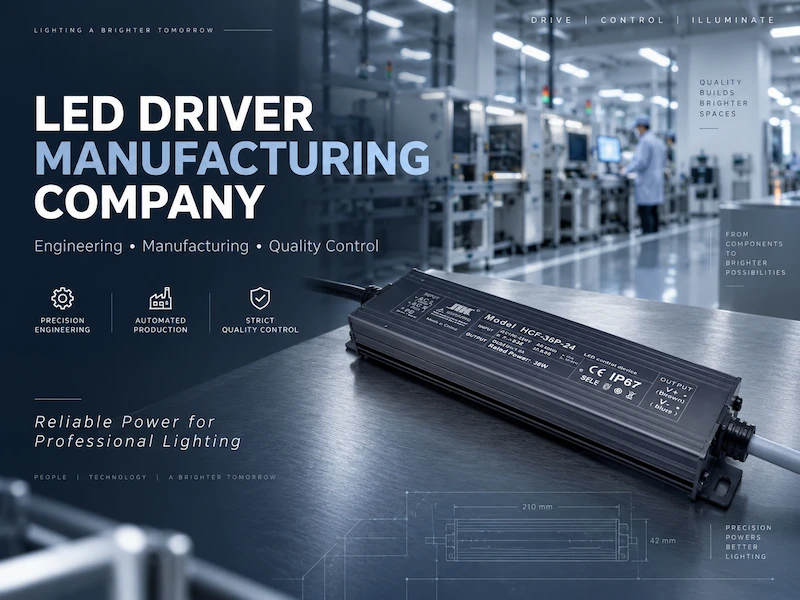
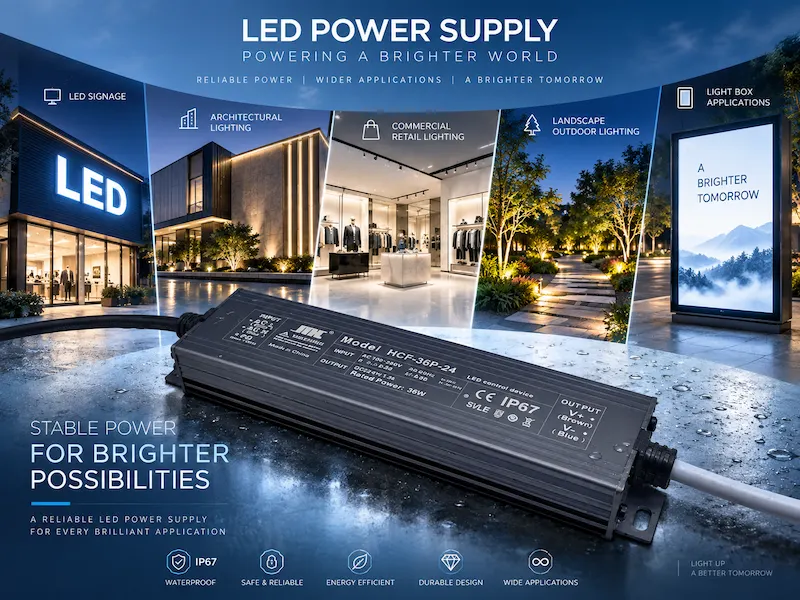
An LED power supply production factory should prove that it can repeatedly manufacture the product configuration a buyer has approved—not simply show a sample that works or a production workshop that looks organized. For lighting brands, fixture manufacturers, signage companies, distributors, and OEM/ODM buyers, the important evidence connects product specifications, controlled materials, production instructions, testing, aging, inspection, packaging, and batch release. JMHC presents itself as a manufacturer integrating LED switching power-supply development and production, while its LED power supply product range covers platforms intended for different lighting and installation requirements.
A useful factory evaluation therefore starts with one representative product and follows it through the manufacturing system. The buyer should be able to understand what enters production, which version is being assembled, what is checked during the process, how failures are handled, and what evidence supports shipment approval. Factory size matters, but repeatability and traceability matter more when the purchasing objective is stable long-term supply.
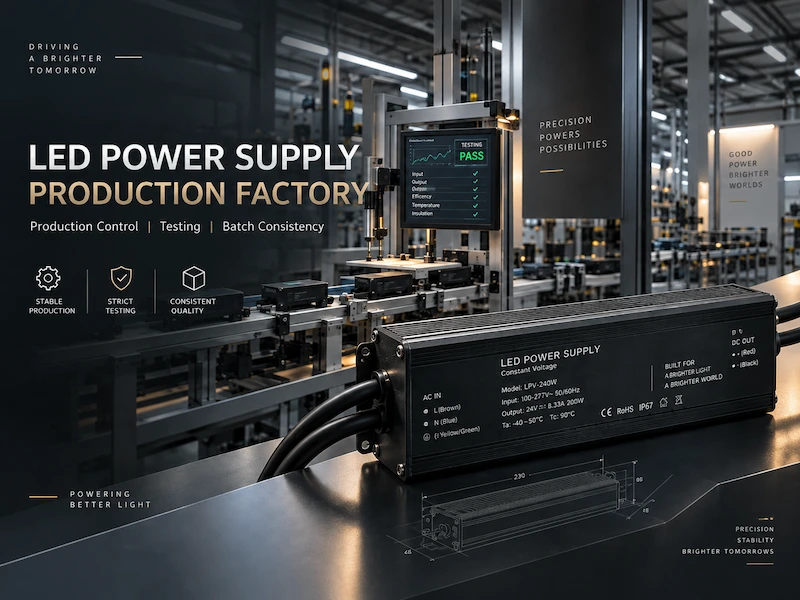
Which Buyers Should Evaluate the Factory in Greater Depth?
Detailed factory qualification is particularly useful for lighting brands building repeat product ranges, LED fixture manufacturers integrating the power supply into their own products, signage companies buying outdoor power supplies in volume, project suppliers serving commercial or architectural installations, and distributors carrying several voltage or wattage variants. These buyers may reorder the same configuration over months or years, so an undocumented component, wiring, test, or labeling change can create problems long after the first sample has been approved.
A small one-time order of an existing standard product may not justify the same depth of review. The first step should be to identify whether the project needs an existing product, a customized version, or a deeper OEM/ODM program. Buyers can review JMHC's LED power supply solutions and existing product categories before defining the level of manufacturing control required.
Start With the Product Specification, Not the Factory Tour
A factory tour is more useful when the buyer already knows what the production line is supposed to make. Before comparing manufacturers, create one controlled product requirement covering input, output, load, dimensions, installation, wiring, environment, control requirements, identification, documentation, and order quantity. Without this reference, buyers may compare different products while believing they are comparing factories.
| Area to Confirm | Buyer Requirement | Factory Evidence to Review |
|---|---|---|
| Product identity | Manufacturer model, buyer SKU and revision | Production order and approved specification |
| Input | Required AC range and frequency | Model-specific datasheet and test limits |
| Output | Constant voltage/current and required rating | Electrical specification |
| Load | Actual application load and rated power | Test conditions and application information |
| Dimensions | Housing size, mounting and available space | Mechanical drawing |
| Wiring | Cable type, length, polarity and connector | Approved wiring specification |
| Environment | Indoor/outdoor location and exposure | Suitable product platform and process controls |
| Dimming/control | Required control method where applicable | Approved functional test |
| Identification | Label and version information | Artwork and final inspection record |
| Packaging | Unit packing, carton and quantity | Packing specification |
| Documentation | Required drawings and compliance files | Model-specific document list |
| Order volume | Sample, pilot and bulk quantities | Production and delivery plan |
The distinction between a requirement, a factory proposal, and a final approved value should remain clear throughout the order. That makes later changes easier to identify and prevents an early quotation from silently becoming the mass-production specification.
How Should an LED Power Supply Production Factory Control Materials?
Material control begins before assembly. Buyers should ask how incoming PCBs, electronic components, housings, cables, connectors, potting materials, labels, and packaging are identified and released for production. The goal is not simply to request expensive branded components; it is to understand which characteristics are controlled and how substitutions are handled when an originally specified item becomes unavailable.
For repeat purchasing, this question is especially important: Can a material be replaced without engineering or customer review? The acceptable answer depends on the component and product, but the factory should have a defined process. A visually identical enclosure, capacitor, connector, or wire does not automatically have identical technical characteristics. Production consistency depends on controlling changes before they reach a shipment.
First-Article Approval Connects Engineering With Mass Production
Before a batch is allowed to run at scale, the first completed production unit can be checked against the approved product configuration. This first-article review may include product identity, PCB revision, wiring, cable length, polarity, housing assembly, labeling, mechanical dimensions, and the electrical parameters relevant to the model.
The value of first-article approval is not the physical sample alone. The important point is that the sample is linked to a known revision. If engineering later changes the output, connector, cable, housing, component, or label, the factory can identify whether a new first-article check is necessary. This is particularly valuable for OEM and ODM customers managing several similar SKUs.
Why Vacuum Potting Matters for Waterproof Power Supplies
For relevant waterproof products, encapsulation is part of the manufacturing process rather than simply a visual feature. JMHC states that its factory uses automatic vacuum glue-filling production lines. Buyers evaluating a waterproof LED power supply should ask how the factory controls the encapsulation material, filling process, cable-entry area, curing, and subsequent inspection for the selected model.
Vacuum equipment alone should not be treated as proof that every finished product automatically meets every outdoor requirement. Product construction, housing, cables, connections, and actual installation conditions also matter. A buyer should therefore connect the potting process to the specific model and its approved application instead of using “waterproof” as a universal description of the complete lighting system.
ATE Testing Should Use Model-Specific Limits
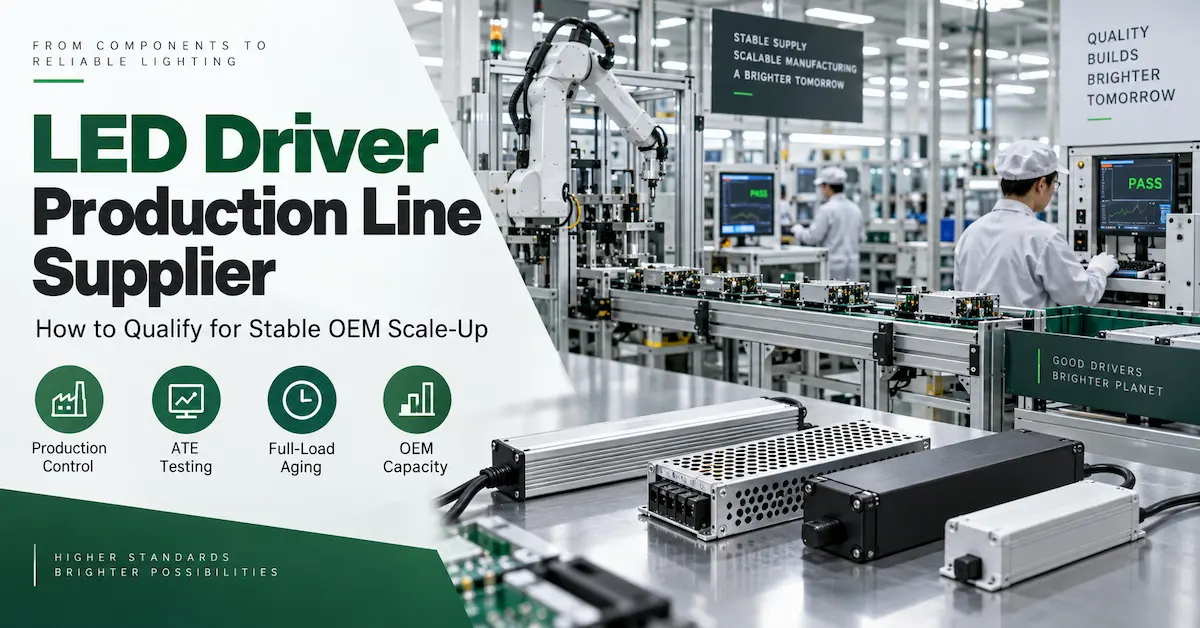
JMHC states that automated test equipment, commonly called ATE, is used within its manufacturing system. Automation can improve test consistency, but the equipment is only useful when the correct test program and limits are applied to the correct product version.
During an LED power supply production factory audit, ask how the operator distinguishes different voltages, wattages, or model revisions and how the appropriate test program is selected. Buyers should understand which electrical characteristics are checked on every unit and which performance tests belong to product qualification or sampling. A green “PASS” indication has limited value unless the buyer also understands what was tested.
What Does 100% Full-Load Aging Tell a Buyer?
JMHC publishes 100% full-load aging as part of its manufacturing approach. For buyers, “100%” describes the stated coverage but does not by itself explain the duration, environmental conditions, monitoring method, or acceptance criteria. These details should be confirmed for the selected production program.
Aging is best treated as a production-screening process. The buyer should ask what happens when a product fails during aging, whether it is repaired or rejected, what needs to be retested, and how its final status is recorded. A full-load aging process can strengthen production screening, but it should not be converted into an unsupported lifetime guarantee.
Final Inspection Should Reconcile the Product With the Order
The last inspection is not only an electrical check. It should confirm that the shipment matches what the customer purchased. Depending on the project, this may include model identity, output variant, cable configuration, label, carton identification, quantity, packaging, and required documents.
A practical audit technique is to start from a finished carton and work backward. Can the factory identify the product version inside it? Can the carton be linked to the correct order or batch? Can accepted quantities be separated from products awaiting review, rework, or rejection? This helps a buyer understand whether “production completed” means units have merely been assembled or have actually passed the agreed release process.
Compare Product Platforms During the Factory Evaluation
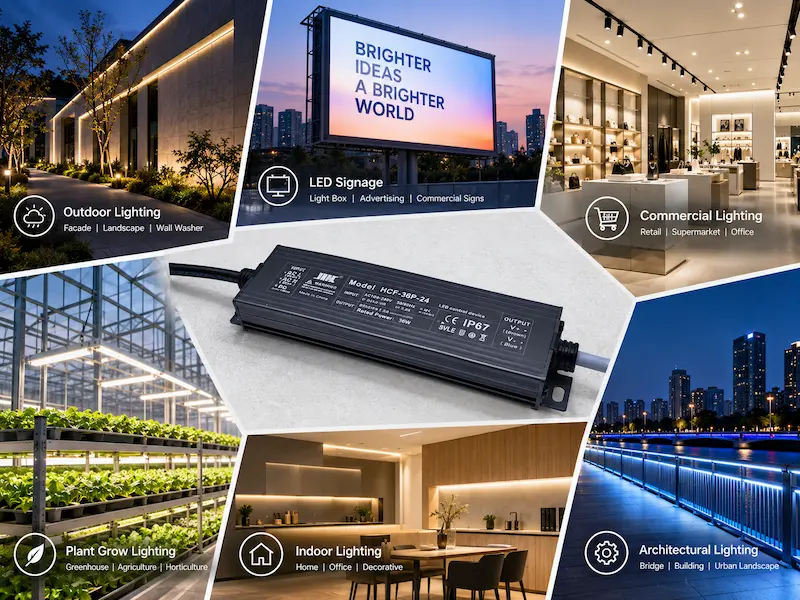
A production factory should be evaluated using products relevant to the buyer's actual application. JMHC's current product structure includes waterproof power supplies, indoor power supplies, and dimmable LED drivers. Each creates different manufacturing and validation questions.
| JMHC Reference Platform | Published Product Direction | Typical Buyer Focus | Factory Review Focus |
|---|---|---|---|
| HCF-A Series 10W IP67 | Compact waterproof power supply | Lower-power lighting and signage | Correct output version, wiring, potting and final test |
| HCF-C Series 20W IP67 | 20W waterproof platform | Signage and decorative lighting | Material consistency, sealing, cable and electrical inspection |
| HCF-P Series 36W PFC | 36W IP67 platform with PFC | Projects with a defined power-factor requirement | Correct test configuration and applicable input/load conditions |
| Indoor Power Supply Range | Indoor and compact formats | Light boxes, displays and protected fixtures | Dimensions, thermal conditions, wiring and assembly |
| Dimmable LED Driver Range | Lighting-control applications | Commercial and architectural projects | Correct control version and functional testing |
These products should not be compared only by wattage. The buyer should match the selected platform to the actual load, installation, control system, environment, and documentation requirement.
Quality Control Needs Acceptance Criteria, Not General Claims
“Strict quality control” does not tell a professional buyer what happens in production. A stronger factory discussion identifies the inspection item, method, frequency, limit, responsibility, and record. Some requirements may be checked on every unit; others may be verified by sampling or during design qualification.
The factory should also be able to explain its handling of nonconforming products. If a unit fails an electrical test, aging process, appearance check, or wiring inspection, does it return to the normal production flow immediately after repair, or is a defined retest required? Clear failure handling helps buyers understand the difference between production quantity and approved shipment quantity.
How Should Buyers Review Certifications and Compliance?
JMHC's company information lists certification and compliance items including CE-related LVD/EMC, CCC, BIS, UKCA, and RoHS. These should be treated as company-published information and checked against the actual product, configuration, and destination market.
A buyer should therefore request the document relevant to the selected model rather than assuming every certificate applies across the entire product catalog. This becomes more important when OEM/ODM changes involve circuit architecture, critical components, wiring, enclosure construction, or other details that may affect existing documentation.
Factory Capacity Is Different From Your Available Capacity
JMHC states on its About Us page that its manufacturing area exceeds 5,000 square meters and its annual production capacity exceeds five million power supplies. These figures provide useful information about factory scale, but they should not be interpreted as an automatic delivery commitment for a specific order.
For bulk sourcing, ask how your order will move through material preparation, assembly, potting or curing where applicable, testing, aging, final inspection, and packaging. Confirm whether mixed-model orders require changeovers and whether buyer-dependent approvals can affect the schedule. The most useful lead-time answer identifies both the expected duration and the milestone from which that duration begins.
OEM and ODM Orders Need Stronger Revision Control
OEM and ODM programs increase the number of variables a factory must manage. A customer may request its own label, packaging, cable, connector, output, housing requirement, or another application-specific change. A deeper ODM project may also involve electrical or mechanical development.
JMHC's solutions include application matching and customization support. Before bulk production, however, the buyer should make sure the final release identifies the approved model, specification revision, drawings, relevant components or materials, wiring, label, packaging, test requirements, and approved sample. When a repeat order is placed months later, this record helps both parties reproduce the same product rather than relying on memory or an old photograph.
How Should Buyers Compare Factory Cost?
The lowest quoted unit price does not necessarily represent the lowest purchasing risk. Two LED power supplies described with the same wattage may differ in wiring, construction, materials, test coverage, packaging, documentation, customization, and commercial terms.
A more useful comparison separates recurring unit cost from one-time engineering, samples, tooling, packaging setup, testing, or documentation charges where applicable. Buyers should also consider the operational cost of incorrect shipments, unexpected component changes, repeated inspection, rework, assembly delays, warranty handling, and difficult replacement sourcing. The goal is not to pay more automatically; it is to make sure the prices being compared describe the same product and supply scope.
What Should You Send an LED Power Supply Production Factory Before Requesting a Quote?
A useful RFQ should include the application, input requirement, output type and rating, actual LED load, target wattage, available installation dimensions, indoor or outdoor environment, control requirements, cable and connector details, destination market, expected documentation, labeling or packaging needs, sample quantity, initial bulk quantity, forecast volume, and desired delivery schedule.
Providing this information allows the factory to determine whether an existing platform already matches the project or whether customization needs to be evaluated. Buyers can submit project requirements through JMHC Contact Us after reviewing the relevant product and solution pages.
Frequently Asked Questions
1. What is an LED power supply production factory?
An LED power supply production factory is a manufacturing facility that converts approved LED power-supply specifications into repeatable production through material control, assembly, relevant encapsulation processes, electrical testing, aging, inspection, and shipment preparation. Buyers should verify the actual manufacturing scope rather than relying only on a company description.
2. What should I check first during a factory audit?
Choose one model related to your purchase and follow it through the factory. Review the approved specification, materials, production instructions, testing, aging, final inspection, and batch identification. This provides more useful evidence than evaluating equipment without connecting it to an actual product.
3. Is factory size the most important factor?
No. Factory size helps indicate scale, but process control, test coverage, engineering support, revision management, material control, available order capacity, and repeat-order consistency are also important.
4. Why is ATE important for LED power supply production?
ATE can standardize electrical checks and reduce variation in manual testing. Buyers should still confirm which parameters and limits are included for the selected model and how the correct test program is controlled.
5. Why does a waterproof power supply need vacuum potting?
Potting can be part of the construction and environmental-protection strategy for suitable designs. Buyers should evaluate the complete product construction, potting material, filling and curing process, cable areas, and model-specific validation rather than relying on the equipment name alone.
6. Does 100% full-load aging guarantee product lifetime?
No. Aging is a manufacturing screening process and should not automatically be interpreted as a lifetime guarantee. Buyers should confirm aging coverage, duration, load, conditions, monitoring, failure handling, and retesting requirements.
7. How can I verify that repeat orders stay consistent?
Use a controlled specification linked to the model, revision, materials or relevant construction requirements, wiring, label, packaging, test requirements, and approved sample. Define how relevant changes must be reviewed before implementation.
8. Can an LED power supply factory support private-label orders?
Private-label requirements may include product identification and packaging, while deeper OEM/ODM programs can involve additional technical changes. The exact scope should be confirmed for the selected product before sample and bulk approval.
9. How should I check a factory's production lead time?
Ask for an order-specific schedule rather than relying only on annual capacity. Confirm material availability, production allocation, process requirements, aging, inspection, customization, and which milestone starts the quoted lead time.
10. What information helps an LED power supply factory quote accurately?
Provide the final application, input/output requirements, load, dimensions, environment, control method, wiring, target market, documentation, customization, quantity, and requested schedule. Better input information reduces assumptions and improves quotation comparability.
Conclusion
Choosing an LED power supply production factory is a supply-chain qualification decision, not simply a comparison of factory size or unit price. B2B buyers should verify how approved requirements move into material control, assembly, waterproof processing where applicable, ATE testing, full-load aging, final inspection, revision management, and batch release. They should also separate company-level capacity and certification claims from the exact conditions applying to their chosen product and order. JMHC publishes manufacturing capabilities including automatic vacuum glue filling, ATE testing, 100% full-load aging, a facility exceeding 5,000 square meters, and annual production capacity above five million power supplies on its About Us page. For a product-specific manufacturing assessment or bulk quotation, send your application, electrical requirements, installation conditions, customization details, target market, and expected quantities through JMHC Contact Us.