What Should an LED Driver Customization Service Actually Include?
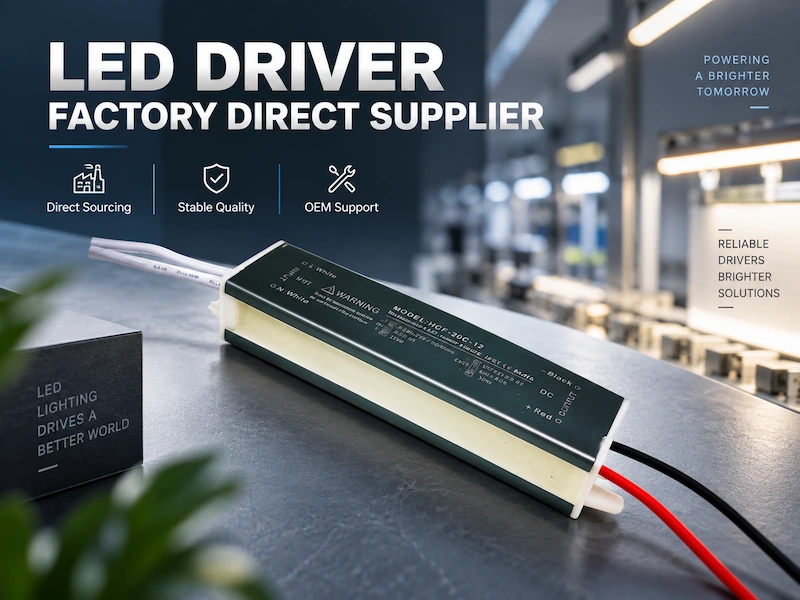
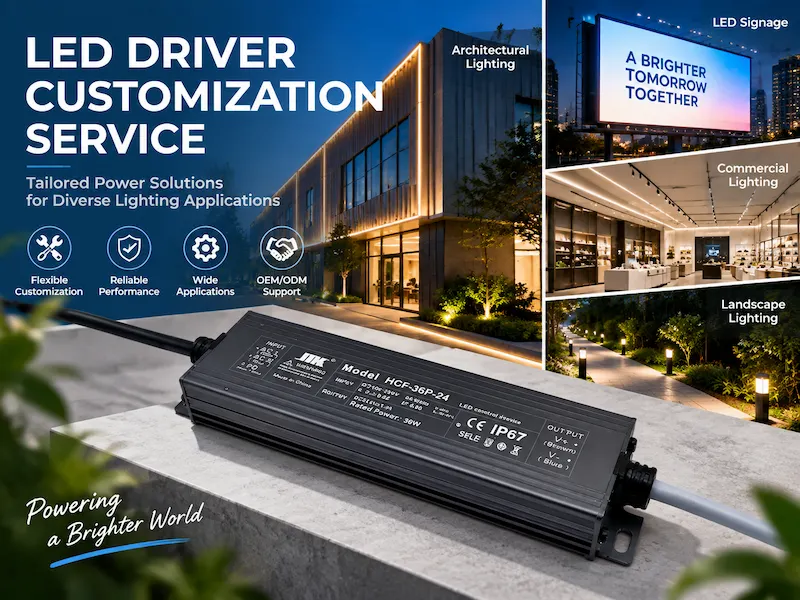
An LED driver customization service should begin with the final lighting application rather than with a request to change a logo, cable, voltage, or enclosure. For a lighting brand, fixture manufacturer, distributor, signage company, or project buyer, the purpose of customization is to make the driver fit a defined electrical, mechanical, environmental, control, and commercial requirement while keeping the final configuration clear enough to reproduce in future orders. Depending on the selected platform and engineering feasibility, the work may involve application matching, electrical configuration, cable and connector requirements, mechanical integration, dimming requirements, identification, packaging, prototype validation, and production preparation. JMHC already provides different product platforms for indoor, waterproof, and controlled-lighting applications, so a buyer can first review the JMHC LED power supply product range and determine whether customization should begin from an existing platform or requires deeper engineering development.
Who Needs a Customized LED Driver—and Who May Not?
Customization is most useful when a standard driver creates a specific product-development problem. A fixture manufacturer may need a power supply to fit a restricted space, match a wiring harness, or work with a particular control system; an outdoor-lighting company may need an appropriate environmental configuration; a signage manufacturer may need cable arrangements suited to installation; and a distributor may want a differentiated product family with its own identification and packaging. By contrast, if a standard catalog model already satisfies the required input, output, mechanical dimensions, installation environment, documentation, and commercial conditions, changing the electrical design simply to make the product “custom” may add unnecessary development cost and validation work. The first decision should therefore be whether the project needs a standard product, a customized production configuration, or a deeper OEM/ODM development program.
Start the Customization Project With the Final Application
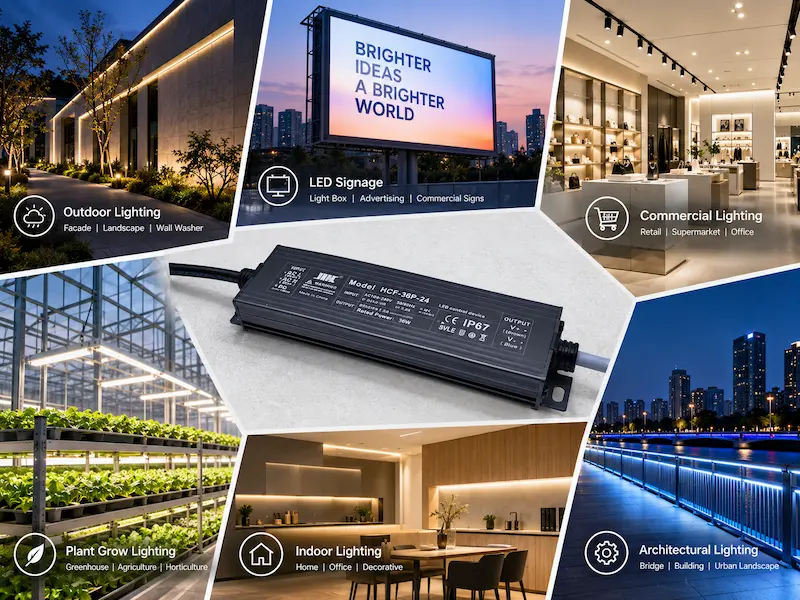
A useful customization brief explains where the driver will operate and how it will interact with the rest of the lighting system. “24V, 100W” is not enough to define a project because two 100W applications can have completely different thermal, environmental, wiring, and installation requirements. An indoor light box may prioritize compact dimensions and accessible wiring; an outdoor sign may need greater attention to exposure and connections; commercial lighting may require dimming compatibility; architectural applications may place tighter restrictions on installation space and maintenance access. JMHC's LED power supply solutions cover lighting, signage, architectural, commercial, and related application directions, giving buyers a useful starting point for describing the operating environment before technical customization begins.
What Can Be Included in an LED Driver Customization Service?
The exact scope should be confirmed for the selected model rather than assumed across the entire product range. A practical customization specification separates the buyer's requirement from the manufacturer's proposed solution and the final approved value. Electrical changes can affect thermal performance, component selection, documentation, testing, and sometimes certification scope, while apparently simple mechanical changes such as cables or connectors may influence assembly, sealing, installation, or traceability. The table below is therefore best used as an RFQ and approval checklist rather than as a promise that every variable can be changed on every model.
| Customization Area | What the Buyer Should Specify | What Should Be Approved Before Production |
|---|---|---|
| Input requirement | Target AC range and frequency | Model-specific approved input specification |
| Output requirement | Voltage/current type, rating and actual LED load | Final output configuration and tolerance |
| Rated power | Required system load and operating margin | Approved rated power and application conditions |
| Housing | Size restriction, mounting and available clearance | Mechanical drawing and approved structure |
| Cable | Type, length, color and exit direction | Wiring specification |
| Connector | Fixture-side connector and mating requirements | Approved connector model and pin definition |
| Dimming | TRIAC, 0–10V, DALI or other required system where applicable | Confirmed control method and compatibility test plan |
| Environmental requirement | Indoor/outdoor location and relevant exposure | Applicable product protection and installation conditions |
| Label | Brand, product code and required information | Final label artwork and revision |
| Packaging | Unit packaging, carton identification and documents | Approved packaging file |
| Documentation | Datasheets, drawings and required compliance documents | Controlled document package |
| Quantity | Samples, pilot quantity and expected bulk demand | Confirmed production and commercial scope |
Electrical Customization Must Be Matched to the LED Load
The first engineering question is not “What wattage should be printed on the label?” but “What does the actual LED system require?” Buyers should define whether the application requires a constant-voltage or constant-current solution, the required output, actual operating load, input conditions, protection expectations, and any control requirements. A changed voltage or wattage should not automatically be treated as a label-level adjustment because it can affect circuit behavior, temperature, efficiency, component stress, and validation. For buyers using waterproof products as a starting platform, JMHC's waterproof LED power supply range provides several current reference models that can be evaluated before deciding whether an electrical modification is necessary.
Dimming Customization Requires System-Level Testing
A dimmable driver should be evaluated with the actual lighting system whenever practical. Buyers should identify the intended control method, controller or dimmer, LED load, required dimming range, expected switch-off behavior, and any project-specific requirements before asking a supplier to customize the driver. A statement that a driver “supports dimming” does not by itself confirm acceptable low-level performance, compatibility with a particular controller, noise behavior, or performance with the final fixture. Projects involving controlled lighting should therefore begin with the JMHC dimmable LED driver category and then move to model-specific engineering evaluation rather than assuming that every control method applies to every driver configuration.
Mechanical Customization Can Improve Fixture Assembly
For fixture manufacturers, cable length, connector selection, housing dimensions, mounting points, lead direction, and installation clearance can be as important as the electrical rating. A driver that performs correctly but requires additional cutting, splicing, or re-routing on the assembly line may increase production time and create more opportunities for wiring errors. A well-defined LED driver customization service should therefore connect electrical engineering with the finished fixture design. Buyers should send mechanical drawings, photographs, harness information, connector specifications, and available installation dimensions whenever possible; the manufacturer can then determine whether an existing housing can be used, whether only wiring changes are needed, or whether deeper mechanical development should be evaluated.
Indoor and Outdoor Customization Need Different Priorities
Installation environment should be decided before the product structure is approved. Indoor products installed inside protected fixtures may prioritize compact size, long or narrow housing formats, accessible terminals, and heat management, while exposed projects may place greater emphasis on sealing, cable entry, enclosure construction, and the protection of the complete installation. Buyers developing compact fixtures, displays, or light boxes can review JMHC's indoor LED power supply range, while applications requiring greater environmental protection can begin from the waterproof category. The important purchasing rule is that an IP designation on the power supply does not automatically define the protection of connectors, wiring joints, fixtures, or the complete installed system; the final environment and installation method should remain part of the engineering review.
Existing Platforms Can Reduce Unnecessary Custom Development
A fully new driver is not always the lowest-risk path. An established platform may already provide the required power range, housing format, environmental positioning, or electrical architecture, allowing the project team to concentrate customization on the variables that create genuine application or commercial value. JMHC currently publishes several waterproof platforms that can be used as reference products during an initial customization discussion.
| JMHC Reference Platform | Published Positioning | Possible Customization Discussion | Key Buyer Check |
|---|---|---|---|
| HCF-A Series 10W IP67 LED Power Supply | Compact 10W waterproof platform | Small outdoor lighting or signage configuration | Output, size, wiring and final installation |
| HCF-C Series 20W IP67 LED Power Supply | 20W waterproof platform | Signage, decorative or related outdoor applications | Load, cable configuration and environmental requirement |
| HCF-P Series 36W PFC LED Power Supply | 36W IP67 platform with published PF up to 0.95 | Projects where power factor is part of the specification | Confirm operating conditions and required electrical configuration |
These examples should be treated as starting platforms rather than proof that every requested modification is already available. If a proposed change affects electrical design, thermal behavior, enclosure construction, wiring, or compliance scope, engineering review and new validation may be required before production.
Materials and Workmanship Need Revision Control
Customization introduces risk when the approved sample and later production are not tied to the same controlled specification. The buyer should therefore identify which materials, cables, connectors, enclosure features, circuit requirements, labels, and other relevant items are controlled and which substitutions require review. For waterproof designs, potting and sealing are production processes rather than simple marketing features. JMHC states on its About Us page that its facility uses automatic vacuum glue-filling production lines and ATE testing equipment. For a customized project, the next question should be how those processes apply to the selected design, what acceptance criteria are used, and how the approved construction is maintained when the product moves from sample to mass production.
Prototype Testing Should Reproduce the Real Installation
A customized sample is useful only when the buyer knows what configuration was tested. Each sample should be linked to a specification revision, wiring configuration, housing version, label status, and test record. Where practical, qualification should use the actual fixture, LED load, controller, installation arrangement, and expected operating conditions rather than relying only on an open-bench functional test. If the buyer changes a cable, connector, driver output, enclosure, dimming system, or other relevant variable after testing, the team should decide whether the change requires partial or complete revalidation. This prevents an early sample from being treated as evidence for a later configuration that was never actually tested.
Quality Control Should Be Defined by Test Items and Limits
“Strict QC” is not enough information for a professional B2B buyer. A better discussion identifies which electrical parameters are checked, what limits apply, whether the customized configuration has its own inspection requirements, how failed units are managed, and how batch or version identification is maintained. JMHC reports ATE testing and 100% full-load aging as part of its manufacturing system, together with more than 5,000 square meters of facility space and annual production capacity above five million power supplies. These are company-level manufacturing statements; buyers should still confirm which test items, aging conditions, capacity allocation, and production controls apply to their specific customized model through JMHC's company and manufacturing information.
Certification and Compliance Should Be Checked by Model and Configuration
JMHC's company information lists certifications and compliance items including CE-related LVD/EMC, CCC, BIS, UKCA, and RoHS. A buyer should not assume that every certificate applies automatically to every model, electrical version, customized cable, enclosure change, label, or destination market. Instead, create a document matrix showing the selected model, proposed customization, target market, applicable certificate or report, and whether additional review or testing is necessary. If compliance is important to market entry, this work should happen before design freeze rather than after packaging has been printed and mass production scheduled.
Branding and Packaging Are Part of Configuration Control
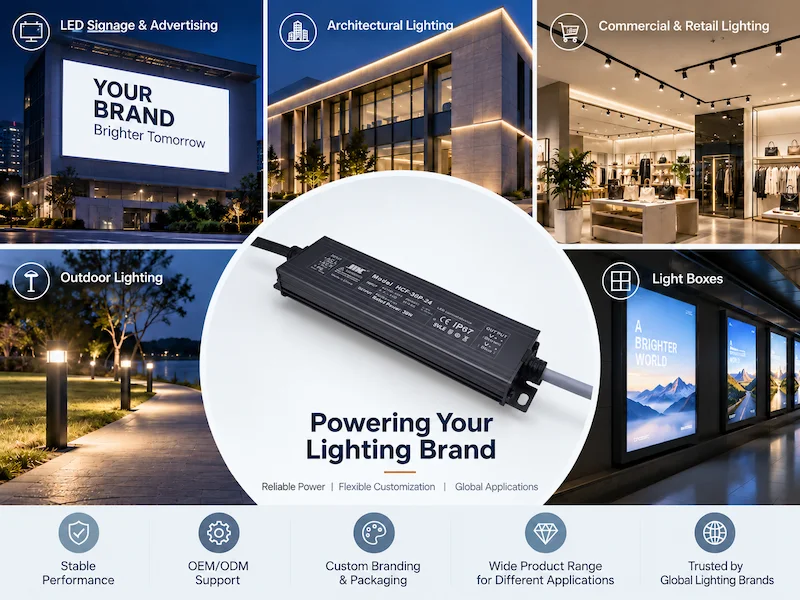
For distributors and lighting brands, customization may also include private labeling, model naming, packaging, documentation, and carton identification where the selected project supports those changes. These elements should be linked to the technical product rather than approved separately with vague file names. A practical record connects the customer's SKU, JMHC model, electrical version, label revision, package revision, and technical specification; this helps purchasing, sales, warehouse, and after-sales teams identify the same product. When several outputs or wattages share similar housings, clear SKU and carton identification becomes especially important because a visually similar product can still be electrically different.
How Much Does LED Driver Customization Cost?
Customization cost depends on the depth of change rather than on the word “custom.” A brand-label and carton project is commercially different from a cable modification, an output adjustment, a new connector, a mechanical redesign, or a deeper circuit-development project. Buyers should therefore ask the quotation to separate recurring unit cost from one-time items such as engineering evaluation, prototype work, tooling where applicable, testing, certification work, and packaging setup. The same principle applies to lead time: requirement review, engineering work, prototype preparation, validation, certification work, pilot production, and mass production are separate stages, so one general number of days may hide where the real schedule risk sits.
A Practical LED Driver Customization Service Workflow
For B2B lighting projects, the most useful workflow is to define the application first, review suitable existing platforms, prepare the technical requirement, confirm which requested changes are feasible, produce a controlled sample, validate the sample in the intended system, close engineering issues, approve documentation and artwork, complete any required pilot or production verification, and finally release the approved configuration for mass production. The production order should reference the same model, specification revision, cable or connector configuration, label, packaging, and testing requirements that were approved during development. If a later order needs a change, record what changed and whether new testing or documentation review is necessary instead of allowing the new version to replace the original specification informally.
What Should You Send JMHC for a Custom LED Driver Quote?
A useful inquiry should include the application, input requirement, output requirement, actual LED load, required wattage, installation dimensions, mounting conditions, indoor or outdoor environment, dimming or control system if applicable, cable and connector requirements, target market, documentation requirements, label and packaging needs, sample quantity, expected first order, annual volume estimate, and required project schedule. Drawings, existing samples, fixture photographs, controller information, and details about problems with the current driver can make engineering evaluation more efficient. Buyers with a defined project can submit those requirements through JMHC Contact Us so the team can determine whether an existing product platform or a deeper customization route is more appropriate.
Frequently Asked Questions
1. What is an LED driver customization service?
It is a project-based service that adapts a driver or power-supply solution to defined application requirements. Depending on the product platform and engineering feasibility, the work can involve electrical configuration, wiring, connectors, mechanical integration, control requirements, identification, packaging, testing, and production preparation.
2. Is customization the same as private labeling?
No. Private labeling mainly concerns brand presentation and product identification, while technical customization may involve electrical, mechanical, thermal, wiring, or control requirements. A project can include both, but they should be approved as separate parts of the final configuration.
3. Can the output voltage or wattage be customized?
Such changes can be evaluated where the selected platform supports them, but buyers should not assume that any output can be changed without engineering consequences. The manufacturer should confirm circuit suitability, temperature behavior, protection requirements, component selection, and validation before approval.
4. Can cable length and connectors be customized?
Cable and connector requests can be evaluated for suitable projects and are particularly useful for fixture manufacturers seeking easier assembly. Buyers should provide cable type, length, connector model, pin definition, exit direction, and mating information rather than simply requesting a “custom cable.”
5. Can a dimmable LED driver be customized for my controller?
The project should specify the required control system and actual controller or dimmer. Compatibility should then be evaluated with the intended load and application conditions instead of assuming that a broad dimming category guarantees performance with every controller.
6. Should I choose an existing platform or develop a new driver?
Begin with existing platforms whenever they already satisfy most electrical, mechanical, and environmental requirements. Deeper development is more appropriate when the existing products cannot meet important fixture, control, size, output, or commercial requirements.
7. How should a customized sample be approved?
Link the sample to a defined specification revision and test it against agreed requirements. Record the load, installation configuration, wiring, controller where relevant, operating conditions, observations, results, unresolved issues, and final approval status.
8. Do company certifications automatically cover customized drivers?
Not necessarily. Certification and compliance should be reviewed against the exact model, configuration, change scope, and target market. Any modification that may affect existing documentation should be identified before mass production.
9. How should buyers reduce production variation after sample approval?
Create a controlled production specification containing the approved electrical configuration, materials or relevant construction requirements, mechanical details, wiring, labeling, packaging, testing criteria, and revision number. Future changes should follow a documented review rather than being introduced informally.
10. What information helps JMHC quote a customization project accurately?
Provide the final application, electrical requirements, actual load, size and installation restrictions, environment, control requirements, wiring, target market, documentation needs, customization details, quantities, and schedule. A complete technical brief allows the manufacturer to evaluate the actual configuration instead of quoting only a generic wattage category.
Conclusion
An LED driver customization service creates the most value when customization is tied to a real lighting-system requirement and managed as a controlled engineering and production process. Buyers should define the application first, identify which electrical, mechanical, wiring, dimming, environmental, branding, and documentation variables genuinely need to change, then approve the sample and production specification against the same requirements. Starting from an existing JMHC product platform can reduce unnecessary development where the basic architecture already fits the project, while deeper OEM/ODM engineering can be evaluated when the fixture needs a more substantial change. JMHC combines existing indoor, waterproof, and dimmable product categories with design, R&D, manufacturing, vacuum glue filling, ATE testing, and full-load aging capabilities described on its website. For a project-specific evaluation, send your load, voltage, installation environment, dimensions, control requirements, cable or connector needs, target market, and expected quantities through JMHC Contact Us.