
LED Power Supply for LED Lighting: The Hidden Component That Determines Whether Lighting Projects Succeed
Anyone who has worked on a lighting project long enough eventually experiences the same moment.
The fixtures are installed. The LEDs look perfect during the initial test. Everything seems stable—until a few weeks later.
A few lights start flickering.
Some drivers run hotter than expected.
A handful of fixtures simply stop working.
What looked like a small component issue suddenly becomes a maintenance problem affecting an entire lighting installation.
In many cases, the root cause is not the LEDs themselves, but the LED power supply for LED lighting that sits quietly inside every fixture. When the power supply cannot handle real-world conditions—heat, humidity, electrical variation—the entire lighting system begins to show instability.
At JMHC, the focus of driver design is simple: a power supply should not just power LEDs; it should support stable lighting performance throughout the entire life of the installation.
What an LED Power Supply Actually Does Inside a Lighting System
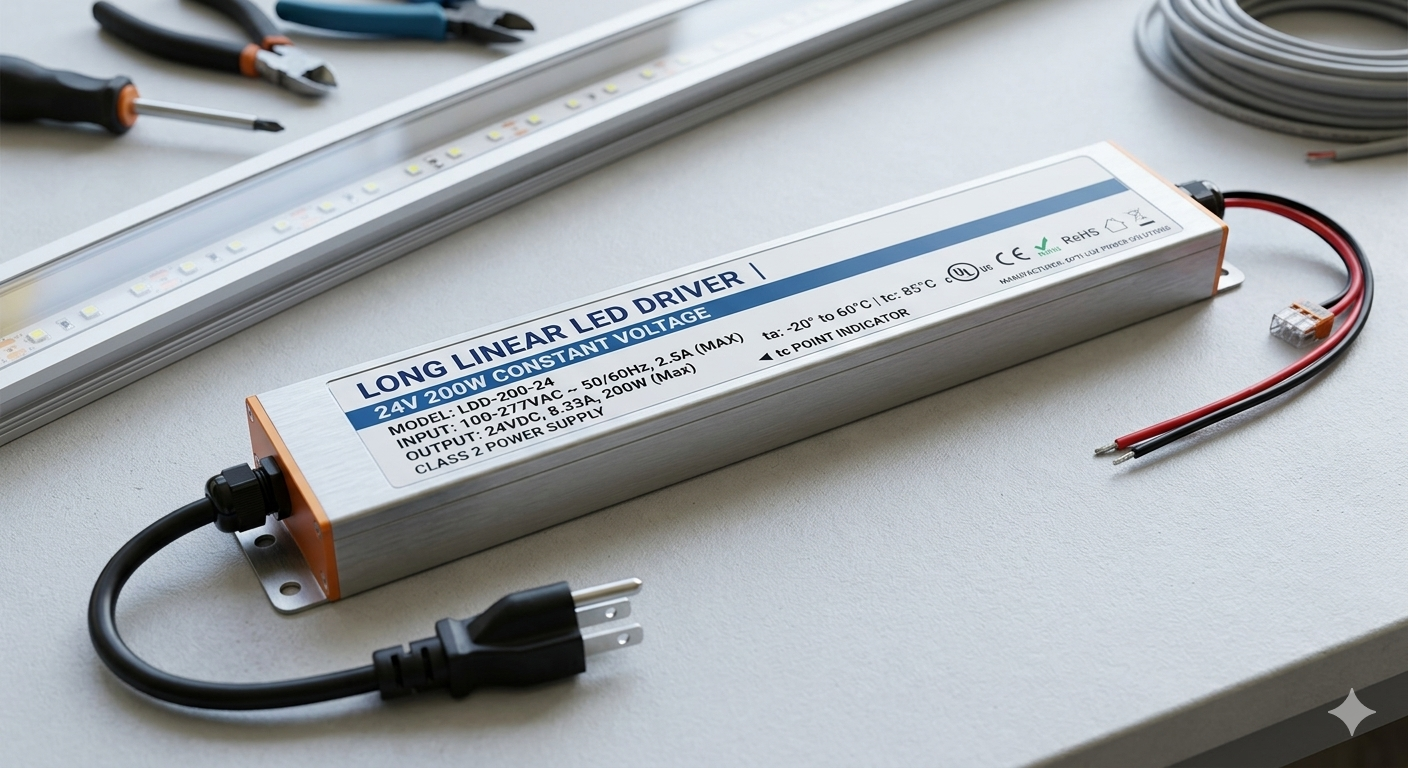
Although it is often hidden inside fixtures or electrical cabinets, the LED power supply is one of the most critical components in any lighting system.
Its core function is to convert incoming AC electricity into a controlled DC output that LEDs can safely use. LEDs are sensitive to current fluctuations. Even small variations in electrical output can shorten their lifespan or cause visible flicker.
Inside a typical LED power supply for LED lighting, several components work together to maintain stability:
-
High-frequency switching circuits regulating power conversion
-
Control IC chips maintaining constant output
-
Electrolytic capacitors stabilizing voltage ripple
-
Transformers adjusting voltage levels
-
Thermal management structures dissipating heat
The materials used in these components play a major role in long-term reliability. For example, high-temperature capacitors and proper aluminum housing help drivers maintain stable performance in demanding environments.
When these design details are overlooked, lighting performance becomes unpredictable.
Why Many Lighting Systems Fail After Installation
Lighting designers often focus on LED chips, optical lenses, and fixture aesthetics. The power supply is sometimes treated as a secondary component.
But field experience tells a different story.
Several recurring problems appear when the power supply is not properly matched to the lighting system:
Flicker in Dimming Systems
In commercial lighting environments using dimming systems, incompatible drivers can produce visible flicker or unstable brightness. This not only affects visual comfort but also reduces perceived product quality.
Overheating in Enclosed Fixtures
When drivers are placed inside compact fixture housings, insufficient thermal design can lead to overheating. Elevated temperatures accelerate component degradation and shorten driver lifespan.
Moisture Damage in Outdoor Installations
Landscape lighting, façade illumination, and signage installations often expose drivers to humidity and rain. Without proper sealing, internal electronics can deteriorate quickly.
These challenges highlight why selecting the right LED power supply for LED lighting is essential from the beginning of the project.
Manufacturing Discipline: Where Driver Reliability Is Actually Determined
Driver reliability is not determined only by circuit design. Manufacturing processes play an equally important role.
At JMHC, driver production follows structured procedures designed to maintain electrical consistency across large production volumes.
Key manufacturing practices include:
-
Controlled sourcing of electronic components
-
Automated PCB assembly to maintain solder quality
-
Sealing processes for waterproof driver models
-
Functional verification of each unit
-
100% full-load aging tests
During aging tests, drivers operate under simulated real-world conditions for extended periods. This process allows unstable units to be identified before shipment, improving long-term field reliability.
Through these production controls, LED power supply for LED lighting solutions can maintain stable performance across thousands of installations.
Real Project Comparison: Stable Drivers vs Generic Drivers
| Performance Factor | Generic Driver Supply | JMHC Driver Production |
|---|---|---|
| Sample-to-batch consistency | ~85% | >98% |
| Failure rate after installation | 6–10% | <3% |
| Thermal tolerance | 60–70°C | 85°C+ |
| Waterproof protection | Limited | IP65–IP67 |
| Maintenance cost reduction | — | Up to 60% |
These differences may seem small at first glance, but they become significant when lighting systems operate continuously in commercial or outdoor environments.
ToB Solutions: Supporting Lighting Brands and Project Integrators
For business buyers, driver reliability affects more than just electrical performance. It influences product reputation, maintenance costs, and long-term project success.
Lighting Brands
Custom driver configurations allow brands to align electrical performance with fixture design while maintaining consistent product quality.
Engineering Contractors
Large lighting installations require thousands of drivers performing identically. Stable power supplies ensure uniform brightness across the entire project.
International Distributors
Export-oriented distributors benefit from drivers aligned with certification requirements such as CE, EMC, and LVD standards.
By working directly with manufacturers experienced in LED power supply for LED lighting, these businesses reduce risk and maintain stable supply chains.
Frequently Asked Questions
Q1: Why is the power supply so important in LED lighting systems?
Because LEDs require stable current to operate safely. Unstable drivers can cause flicker, overheating, and shortened LED lifespan.
Q2: How can buyers evaluate power supply quality?
Key indicators include component quality, thermal design, manufacturing processes, and aging tests.
Q3: Are waterproof drivers necessary for outdoor lighting?
Yes. Outdoor installations require sealed drivers that protect internal electronics from humidity and environmental exposure.
Building Reliable Lighting Systems Starts With the Right Power Supply
Lighting systems often receive attention for their design and brightness, but long-term stability usually depends on the power supply hidden inside each fixture.
At JMHC, driver design and manufacturing are developed with real operating conditions in mind—from component selection to full-load testing procedures. The goal is simple: provide LED power supply for LED lighting solutions that remain stable throughout years of operation.
To learn more about our LED power supply products and manufacturing capabilities, visit our homepage:
👉 https://www.jmhce.com/
If you are developing lighting products or planning a new lighting installation, our team can help you identify the most suitable power supply solutions:
👉 https://www.jmhce.com/contact-us