What Is an LED Driver and Why Does Supplier Selection Matter?
An LED driver is an electronic device that regulates electrical power supplied to LED lighting systems. It converts and controls input power to provide suitable voltage or current conditions required by LEDs, helping maintain stable brightness, efficiency, and operating life.
For lighting manufacturers and project buyers, selecting an LED driver supplier is not only about finding a product with the correct wattage. A reliable supplier must provide consistent electrical performance, controlled production quality, suitable certifications, technical support, and stable repeat-order capability.
Poor driver selection can lead to:
- LED flickering
- Reduced lighting lifespan
- Overheating problems
- Unstable brightness
- Higher maintenance costs
- Project delays caused by replacement failures
For this reason, professional buyers evaluate both the product and the manufacturer's engineering and production capability.
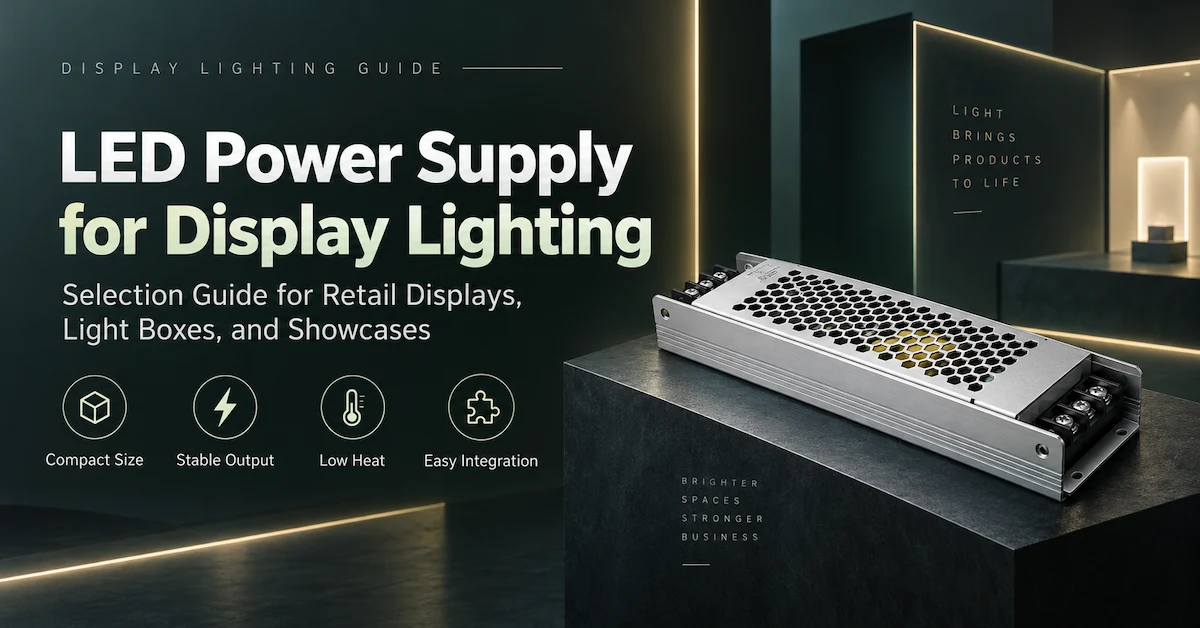
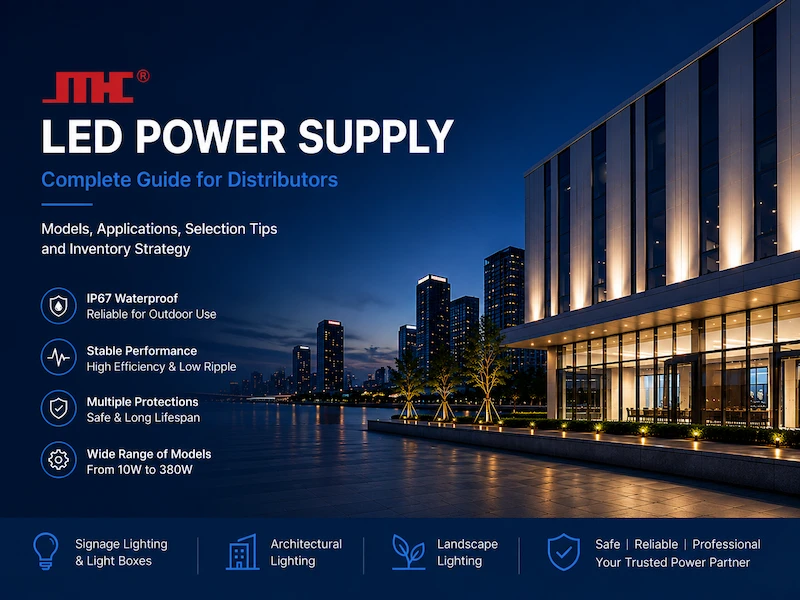
JMHC provides LED switching power supply solutions for indoor and outdoor lighting applications, including waterproof LED drivers, indoor power supplies, high-efficiency models, and customized OEM/ODM solutions. Learn more about our solutions here: https://www.jmhc-led.com/led-driver

How Does an LED Driver Work?
LEDs are semiconductor devices that require controlled electrical conditions. Unlike traditional lamps that can directly connect to a power source, LEDs need regulated power to prevent excessive current and thermal stress.
An LED driver manages:
- Input voltage conversion
- Output voltage/current regulation
- Electrical protection
- Thermal performance
- Dimming control when required
During operation, LED characteristics can change with temperature. As temperature increases, electrical behavior may change, which can increase stress on LED components if the power system is not properly controlled.
A suitable LED driver helps maintain stable operation by matching the electrical requirements of the LED system.
Constant Voltage vs Constant Current LED Drivers
One of the first decisions when selecting an LED driver supplier is understanding whether the application requires constant voltage or constant current output.
Constant Voltage LED Driver
Constant voltage drivers provide a fixed output voltage, commonly used for LED strips, modules, signage lighting, and many architectural lighting applications.
Typical characteristics:
- Fixed voltage output
- Suitable for parallel LED systems
- Common 12V, 24V, 36V and 48V solutions
- Flexible for LED strip and module applications
Common applications:
- LED light boxes
- Signage systems
- Decorative lighting
- Landscape lighting
- Commercial displays
Constant Current LED Driver
Constant current drivers provide a controlled current output and are commonly used for LED fixtures where current regulation is critical.
Typical applications:
- High-power LED modules
- Professional lighting fixtures
- Industrial lighting systems
- Specialized lighting equipment
Choosing the correct driver type depends on the LED module design, electrical requirements, and installation environment.
Key Factors to Consider When Choosing an LED Driver Supplier
A reliable LED driver supplier should help customers evaluate more than basic specifications.
1. Application Requirements
Before selecting a driver, buyers should define:
- LED type
- Total power consumption
- Operating hours
- Installation environment
- Required protection level
- Dimming requirements
- Certification requirements
Different applications require different solutions.
For example:
| Application | Recommended Considerations |
|---|---|
| Indoor lighting | Compact size, efficiency, thermal control |
| Light boxes | Slim design, stable output, long operation |
| Outdoor signage | Waterproof protection, sealing quality |
| Landscape lighting | IP rating, temperature resistance |
| Architectural lighting | Reliability, certification, long service life |
| Industrial lighting | Continuous operation and protection |
2. Output Voltage and Power Matching
Incorrect power selection is one of the most common causes of LED system problems.
Buyers should consider:
- Required output voltage
- Total LED load
- Power margin
- Operating environment
- Continuous working conditions
A professional LED driver supplier should help customers select a suitable model instead of simply recommending the highest wattage product.
For example, if an LED system requires 100W continuous operation, selecting a driver with reasonable power margin can reduce thermal stress and improve reliability.
3. Waterproof Protection and Outdoor Reliability
Outdoor lighting applications require additional protection against:
- Rain
- Moisture
- Dust
- Temperature changes
- Outdoor installation conditions
For these environments, buyers should evaluate:
- IP rating
- Housing design
- Cable sealing
- Potting process
- Thermal management
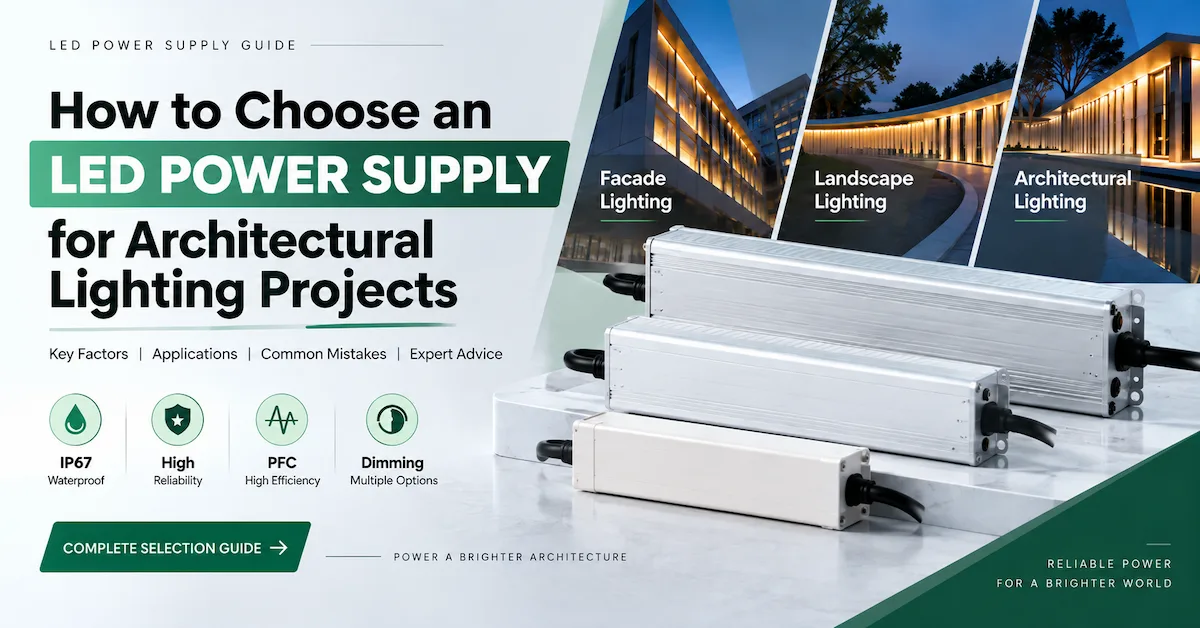
JMHC offers waterproof LED driver solutions including IP67 products designed for outdoor lighting applications such as landscape lighting, signage, and architectural lighting. Explore waterproof solutions here: https://www.jmhc-led.com/waterproof-led-driver
The manufacturing process includes automatic vacuum glue filling to improve waterproof production consistency.
4. Dimming Compatibility
Modern lighting projects increasingly require adjustable brightness and smart control.
A suitable LED driver supplier should provide compatible dimming solutions.
Common dimming methods include:
TRIAC Dimming
Often used in residential and commercial lighting systems.
0-10V Dimming
Common in commercial lighting control systems.
PWM Dimming
Used when digital brightness control is required.
DALI Control
Used in intelligent lighting management systems.
Before purchasing, buyers should confirm:
- Compatible dimming protocol
- Dimming range
- Flicker performance
- Controller compatibility
How to Evaluate LED Driver Supplier Quality
A professional supplier should demonstrate manufacturing capability, not only provide product catalogs.
Important evaluation points include:
Production Control
Check whether the supplier has:
- Controlled BOM management
- Standard production processes
- Incoming material inspection
- Production inspection
- Final inspection
Electrical Testing
Reliable LED driver suppliers should perform electrical verification including:
- Input testing
- Output testing
- Protection testing
- Load testing
- Performance verification
Aging Testing
Full-load aging helps identify potential problems before shipment.
It can reveal:
- Abnormal temperature rise
- Component issues
- Output instability
- Early failures
JMHC applies ATE testing and 100% full-load aging as part of its quality control approach.
OEM and Custom LED Driver Solutions
For lighting brands and manufacturers, standard products may not always meet specific project requirements.
A capable LED driver supplier should support:
- Custom output voltage
- Custom wattage
- Cable customization
- Connector selection
- Label customization
- Packaging customization
- Engineering support
OEM/ODM service is especially valuable for:
- Lighting brands
- Fixture manufacturers
- Distributors
- Engineering companies
A good supplier should support the complete process from specification confirmation and samples to pilot production and mass manufacturing.
LED Driver Supplier Checklist Before Bulk Orders
Before placing a large order, buyers should confirm:
| Evaluation Item | Questions to Ask |
| Product matching | Is the driver suitable for my LED application? |
| Quality system | How is production quality controlled? |
| Testing | Are electrical tests and aging performed? |
| Certifications | Are certificates available for the target market? |
| Customization | Can the supplier support OEM requirements? |
| Capacity | Can the factory support repeat orders? |
| Technical support | Can engineers assist with selection? |
Choosing based only on price may create additional costs later through failures, replacements, and project delays.
FAQ
What should I look for in an LED driver supplier?
A reliable supplier should provide stable product quality, technical support, manufacturing capability, testing processes, certifications, and long-term supply capability.
What is the difference between an LED driver and an LED power supply?
In many applications, the terms are used interchangeably. Both regulate electrical power for LED systems, but LED driver terminology often focuses on controlled power delivery for LED modules and lighting applications.
How do I choose the correct LED driver wattage?
Calculate the total LED load and select a suitable power rating with enough operating margin. Consider environmental conditions and continuous operation requirements.
Are waterproof LED drivers better for outdoor lighting?
For outdoor applications exposed to rain and moisture, waterproof LED drivers with appropriate protection ratings are usually more suitable than indoor models.
Can an LED driver supplier provide customized products?
Yes. Professional manufacturers often provide OEM/ODM services including voltage, wattage, cable, labeling, packaging, and product configuration customization.
Why is LED driver testing important?
Testing helps verify electrical performance, reliability, protection functions, and production consistency before products reach customers.
What applications use LED drivers?
LED drivers are widely used in signage, light boxes, landscape lighting, architectural lighting, commercial lighting, industrial lighting, and decorative lighting.
How can I verify LED driver supplier reliability?
Review factory capability, production process, quality control, testing equipment, certifications, customer experience, and repeat-order capability.
Why does thermal management matter for LED drivers?
Heat affects electronic component lifespan and product reliability. Proper thermal design helps maintain stable performance during long-term operation.
Can JMHC support bulk LED driver orders?
JMHC provides LED power supply manufacturing, OEM/ODM support, testing, aging processes, and customized solutions for lighting manufacturers, distributors, and project customers.
Conclusion
Selecting the right LED driver supplier is an important decision for lighting manufacturers and project buyers. The best supplier should provide not only suitable products but also reliable manufacturing, quality control, technical support, and long-term cooperation.
JMHC develops and manufactures LED switching power supply solutions for indoor and outdoor applications, including waterproof LED drivers, constant voltage solutions, dimmable products, and customized OEM/ODM services.
For lighting projects, bulk purchasing, or customized LED driver requirements, contact JMHC with your application details, voltage requirements, power specifications, quantity, and certification needs.