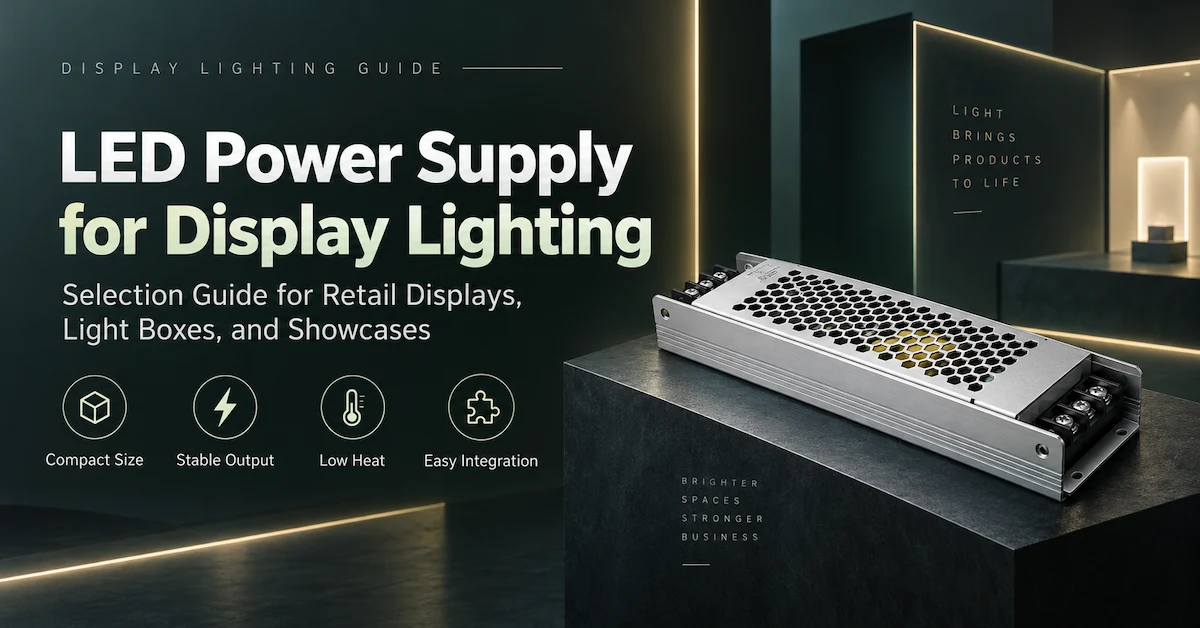

For lighting brands and system integrators, LED drivers are not just electronic components—they directly determine product reliability, brightness stability, and overall lifespan. When standard drivers fail to match fixture design or project requirements, OEM manufacturing becomes the most effective solution.
Applications such as architectural lighting, commercial fixtures, signage systems, and outdoor installations often require drivers that match specific electrical parameters, environmental conditions, and certification standards. Without customization, lighting systems may experience flicker, overheating, or premature driver failure.
This is where LED driver OEM manufacturing provides real value. By integrating product design, materials selection, and controlled production processes, manufacturers like JMHC help lighting companies develop drivers that align with both engineering requirements and scalable production.
Understanding LED Drivers: Structure, Materials, and Performance
Before discussing OEM solutions, it is useful to understand the fundamental components that determine driver performance.
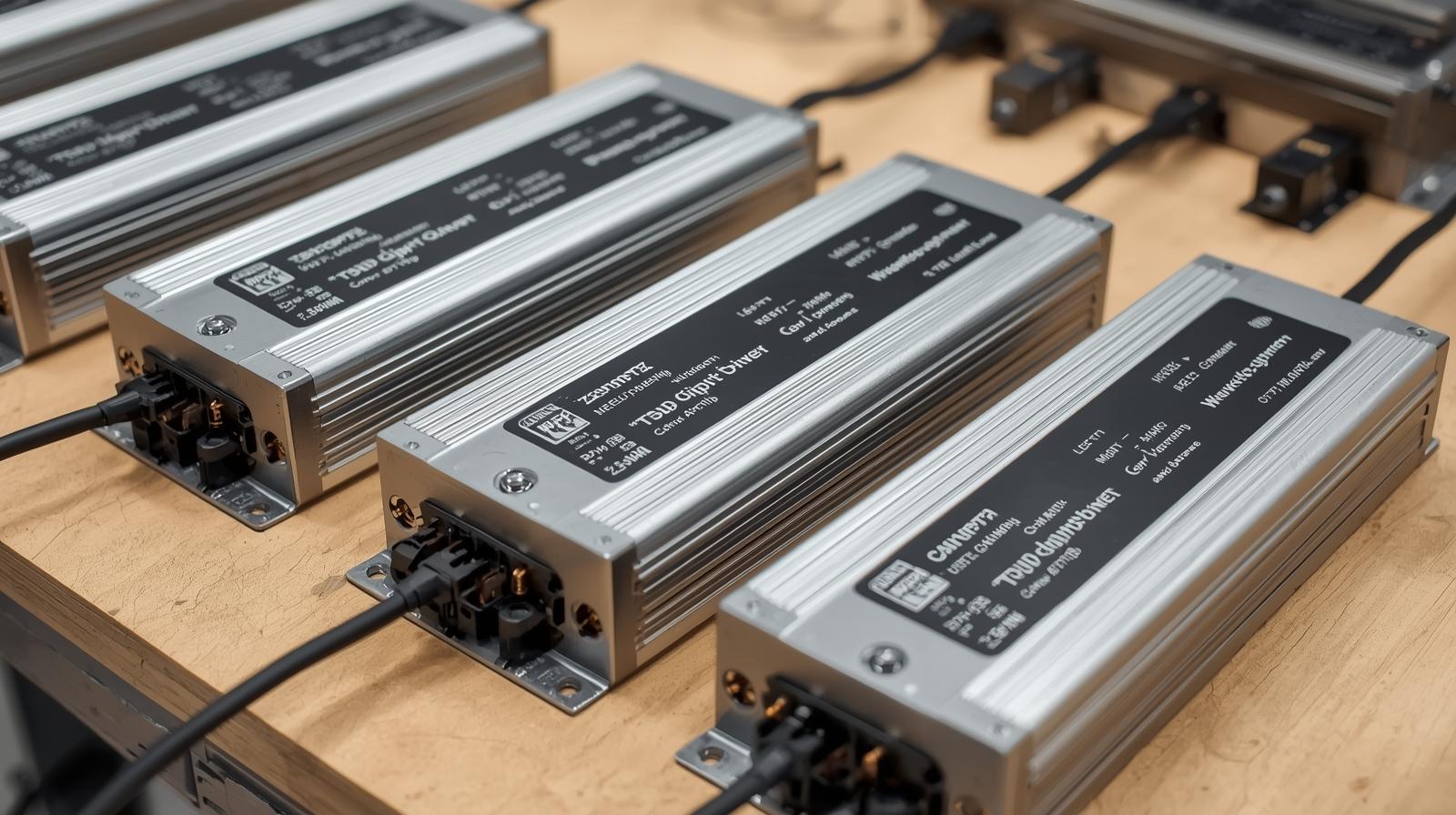
An LED driver converts electrical power into controlled current suitable for LED systems. Unlike simple adapters, drivers must regulate current precisely while maintaining efficiency and thermal stability.
Key internal components include:
-
Switching transformers responsible for voltage conversion
-
MOSFET switching elements that regulate power flow
-
Control IC chips maintaining constant current output
-
High-grade capacitors stabilizing voltage ripple
-
Aluminum housings or sealed enclosures supporting thermal dissipation
Material quality strongly affects reliability. For instance, capacitors with insufficient lifespan ratings can shorten driver life, while poor heat management materials increase internal temperature stress.
In OEM production, selecting appropriate materials is one of the first steps in ensuring stable long-term performance.
Why OEM Manufacturing Matters for Lighting Brands
Lighting brands often face a common challenge: balancing product differentiation with production stability.
Standard off-the-shelf drivers may not match:
-
fixture structure and size
-
dimming system compatibility
-
thermal design of the lighting fixture
-
certification requirements for export markets
Through LED driver OEM collaboration, manufacturers work with brands to align driver specifications with fixture design and application environment. This reduces the risk of incompatibility during product launch or mass production.
OEM manufacturing also allows brands to maintain product identity while ensuring stable component supply.
Engineering Development in OEM Projects
Successful OEM development requires coordination between design and manufacturing.
The typical process includes:
-
Requirement analysis based on fixture design and electrical parameters
-
Circuit design and component selection
-
Prototype development and functional testing
-
Engineering validation under full load conditions
-
Pilot production to verify manufacturing feasibility
-
Mass production with standardized processes
By following this structured workflow, LED driver OEM projects move from concept to production with fewer design revisions and lower failure rates.
Manufacturing and Processing Control
Even well-designed drivers require strict production discipline to maintain consistency.
At JMHC, driver manufacturing includes:
-
standardized component sourcing
-
controlled PCB assembly processes
-
encapsulation or sealing for waterproof models
-
functional electrical testing
-
100% full-load aging tests
These processes ensure drivers maintain stable output across large production batches.
OEM Production vs Standard Supply: Performance Comparison
| Evaluation Factor | Standard Driver Supply | OEM Manufacturing (JMHC) |
|---|---|---|
| Design adaptability | Limited | Fully customized |
| Sample success rate | ~85% | >95% |
| Batch consistency | ~88% | >98% |
| Failure rate | 6–10% | <3% |
| Certification readiness | Moderate | Pre-aligned |
| Product differentiation | Low | High |
OEM collaboration therefore improves both product performance and brand competitiveness.
ToB Solutions for Lighting Brands and Integrators
OEM services are particularly valuable for business buyers who require scalable production.
Lighting Brands
Brands developing new fixture designs can integrate customized drivers that match their thermal structure and electrical performance.
Engineering Contractors
Large lighting installations require consistent driver performance across thousands of units. OEM manufacturing ensures uniform output and stable brightness.
International Distributors
Export-oriented distributors benefit from drivers aligned with certification requirements such as CE, UKCA, EMC, and LVD.
Through LED driver OEM partnerships, these buyers reduce development risk while maintaining stable long-term supply.
Frequently Asked Questions
Q1: When should lighting brands choose OEM drivers?
When fixture design requires customized electrical output, structural dimensions, or certification compliance.
Q2: Does OEM development increase production cost?
While development cost may increase initially, optimized production usually reduces long-term cost through improved efficiency and reliability.
Q3: How long does an OEM driver development cycle take?
Depending on complexity, but structured development can reduce overall time by minimizing redesign cycles.
Partnering With a Reliable LED Driver OEM Manufacturer
JMHC provides integrated OEM services covering driver design, manufacturing, and quality validation. Through controlled production processes and full-load aging tests, our goal is to ensure stable driver performance across indoor, outdoor, and dimmable lighting systems.
To explore our LED driver products and customization capabilities, visit our homepage:
👉 https://www.jmhce.com/
If you are planning a new lighting product or need OEM driver development, contact our engineering team:
👉 https://www.jmhce.com/contact-us