In the LED lighting industry, many brands face the same challenge: products look technically similar, perform similarly, and compete mainly on price. At the same time, internal development resources are often limited, making it difficult to launch differentiated products quickly while maintaining stable quality and certification compliance.
To solve these problems, JMHC provides structured LED driver ODM solutions that combine electrical engineering, thermal optimization, rapid prototyping, and scalable production integration. Instead of only manufacturing based on drawings, the ODM process focuses on helping lighting brands transform product concepts into commercially viable driver systems.
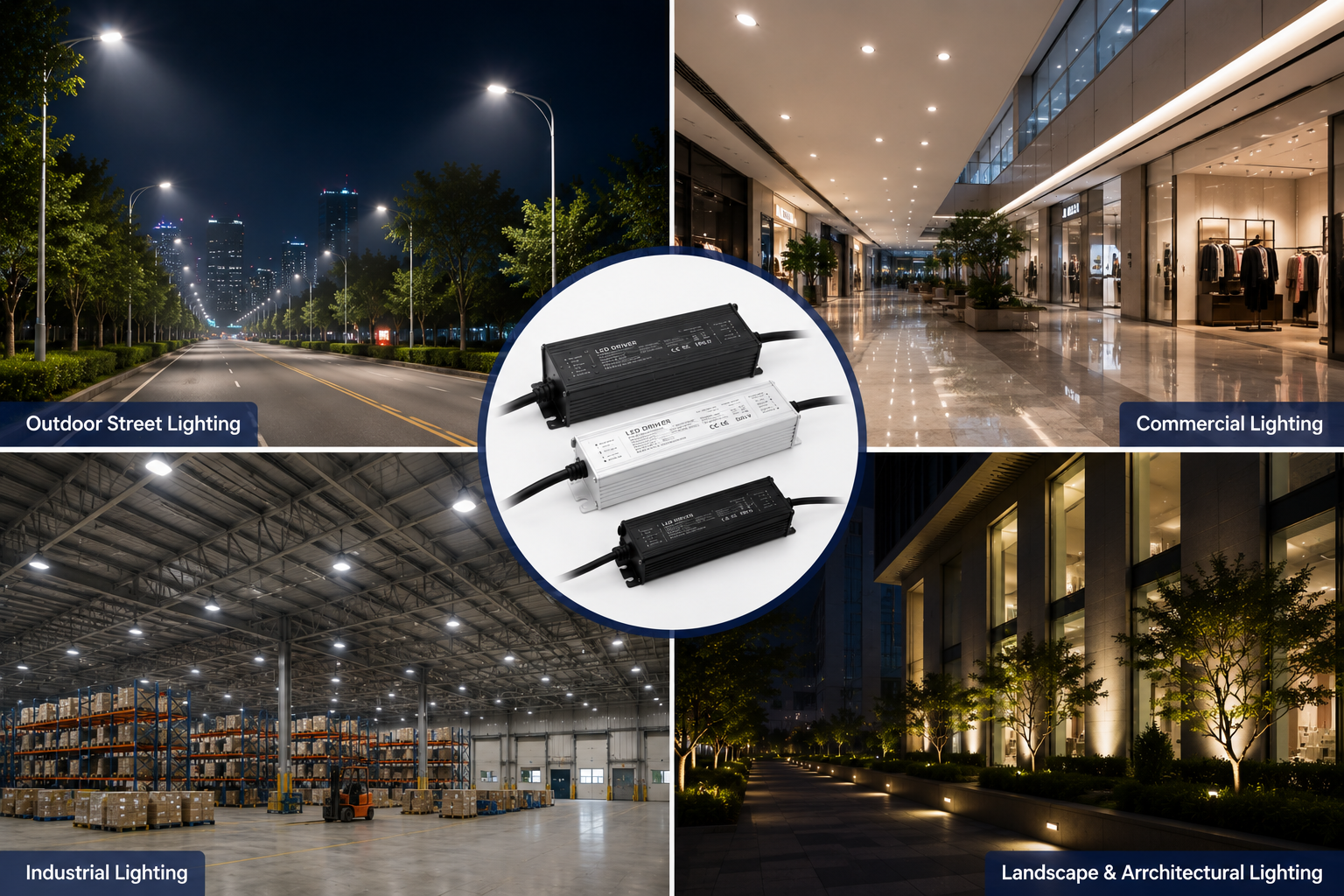
What Makes LED Driver ODM Different from OEM
Many buyers confuse ODM and OEM, but the technical role is different.
A standard OEM process mainly focuses on manufacturing based on existing specifications.
A true LED driver ODM process includes:
- product definition support
- electrical architecture design
- driver circuit optimization
- thermal and protection system development
- certification-oriented engineering
- prototype validation and production scaling
This allows brands to reduce internal R&D pressure while accelerating product development.
Core Technical Architecture in LED Driver ODM Design
Stable ODM drivers require system-level engineering rather than isolated component selection.
JMHC LED driver ODM systems typically include:
- constant current control for stable brightness
- low ripple design (<5%) to reduce flicker
- high-efficiency switching topology (>90%)
- thermal optimization structure
- integrated protection systems (OVP / OCP / SCP / OTP)
- optional waterproof LED driver ODM configuration (IP65–IP67)
These engineering structures help maintain reliability across commercial, outdoor, and industrial applications.
Product Development Workflow in ODM Projects
Many ODM failures occur because development and production are disconnected.
JMHC solves this through a structured ODM workflow:
- Product requirement analysis
- Driver circuit simulation and optimization
- Prototype validation and thermal testing
- Certification-oriented engineering adjustments
- Production process alignment
- Full-scale manufacturing implementation
This workflow improves both development efficiency and production stability.
Application-Oriented ODM Driver Solutions
Different lighting applications require different ODM development strategies.
Commercial Lighting Brands
Challenge: Product differentiation in a competitive market
Solution:
- customized driver architecture
- stable dimming compatibility
- optimized constant current control
This helps brands create more distinctive lighting systems.
Outdoor Lighting Projects
Challenge: Waterproof reliability and environmental durability
Solution:
- waterproof LED driver ODM structure
- encapsulated internal protection
- surge-resistant design
This improves long-term outdoor stability.
Industrial Lighting Systems
Challenge: Long operating cycles and thermal stress
Solution:
- high-efficiency thermal layout
- heavy-duty component configuration
- long-life reliability optimization
This reduces maintenance and replacement costs.
Performance Comparison: Standard Driver vs ODM Driver Solution
| Parameter | Standard Driver | JMHC ODM Driver |
|---|---|---|
| Product differentiation | Low | High |
| Output ripple | 10–15% | <5% |
| Efficiency | 80–85% | >90% |
| Batch consistency | ~80% | >95% |
| Failure rate | 8–12% | <3% |
| Development flexibility | Limited | High |
These differences directly affect market competitiveness and long-term lifecycle cost.
Real ODM Case: Accelerating a Commercial Lighting Product Launch
A lighting company wanted to launch a differentiated commercial lighting series but faced several challenges:
- lack of internal driver engineering capability
- unstable performance in existing solutions
- slow product development timeline
After adopting JMHC LED driver ODM support:
- driver architecture was optimized for the application
- prototype validation cycle shortened significantly
- production consistency improved to >95%
- overall time-to-market reduced by approximately 30%
This demonstrated how ODM integration improves both engineering efficiency and commercial execution.
Engineering Solutions to Common ODM Driver Challenges
ODM projects require solving both product development and manufacturing stability issues simultaneously.
1. Lack of Product Differentiation
Problem:
Lighting products appear technically identical to competitors.
Root Cause:
Dependence on standard driver platforms.
Solution Framework:
- custom circuit architecture
- tailored dimming and output configuration
- application-based optimization
Result:
More differentiated and competitive lighting products.
2. Driver Flicker and Output Instability
Problem:
Visible flicker affects lighting quality.
Root Cause:
Weak current regulation and poor filtering.
Solution Framework:
- optimized constant current feedback loop
- low ripple circuit design
- high-quality capacitor integration
Result:
Stable flicker-free lighting performance.
3. Thermal Accumulation in Compact Designs
Problem:
Driver overheating reduces lifespan.
Root Cause:
Poor PCB thermal layout and inefficient conversion.
Solution Framework:
- high-efficiency switching topology
- optimized heat dissipation pathway
- aluminum housing thermal structure
Result:
Lower operating temperature and longer lifespan.
4. Outdoor Environmental Failure
Problem:
Drivers fail under moisture and temperature variation.
Root Cause:
Insufficient sealing and protection.
Solution Framework:
- waterproof LED driver ODM enclosure
- encapsulation process
- surge and insulation protection
Result:
Stable outdoor reliability.
5. Prototype-to-Production Inconsistency
Problem:
Mass production differs from validated samples.
Root Cause:
Weak production alignment.
Solution Framework:
- standardized manufacturing workflow
- automated PCB assembly
- full-load aging tests
- production traceability system
Result:
Consistent performance across large production batches.
Frequently Asked Questions
Q1: What is LED driver ODM service?
ODM service includes product design, engineering optimization, and scalable manufacturing support.
Q2: Why choose ODM instead of standard products?
ODM allows brands to create differentiated products with better application matching.
Q3: Can ODM drivers support waterproof outdoor applications?
Yes, JMHC supports IP65–IP67 waterproof LED driver ODM solutions.
Successful ODM Projects Require Engineering and Manufacturing Integration
A reliable LED driver ODM project depends on more than manufacturing capacity. Stable performance requires alignment between electrical engineering, thermal optimization, production control, and application-oriented development.
JMHC integrates these capabilities to help lighting brands accelerate product development while improving long-term reliability and market competitiveness.
Explore JMHC LED Driver Solutions
https://www.jmhce.com/products