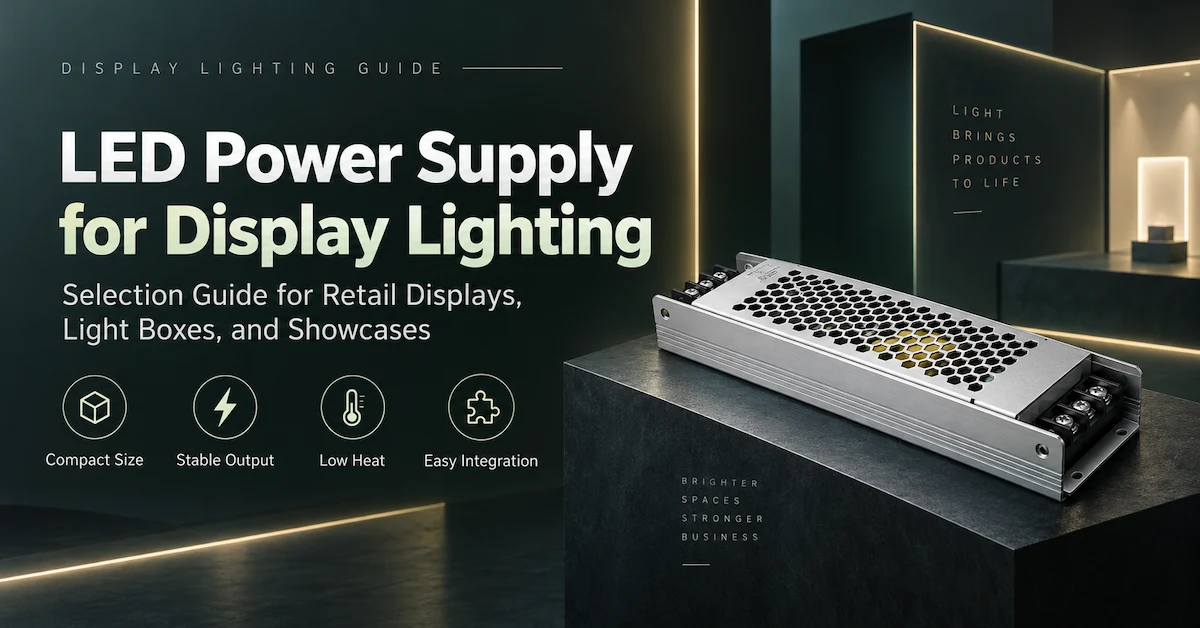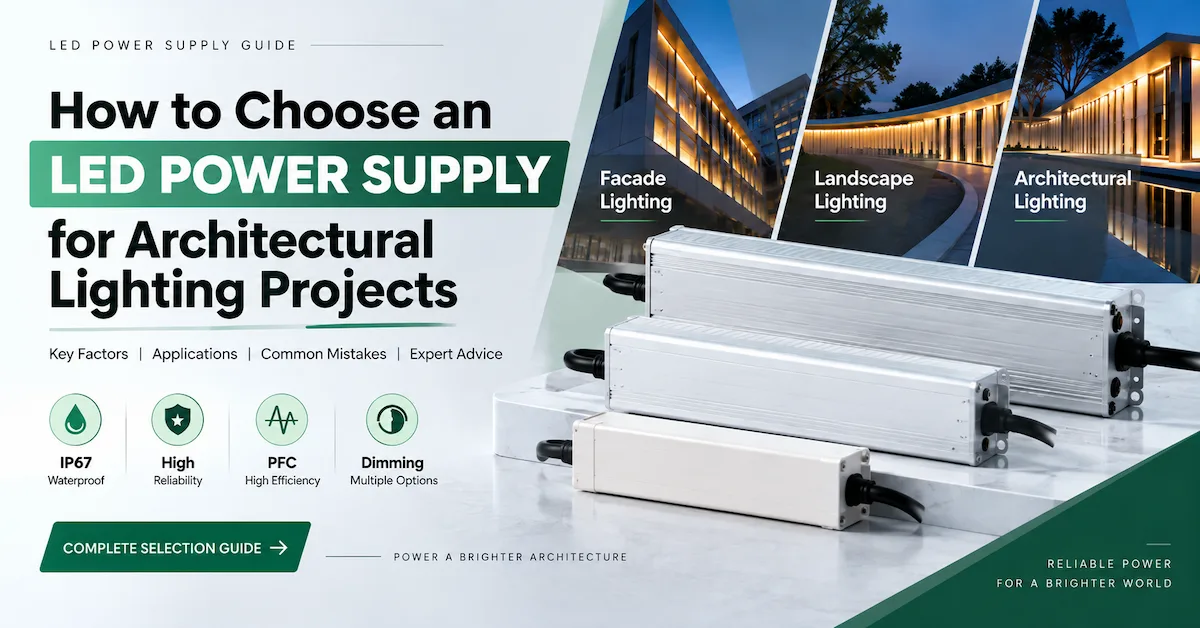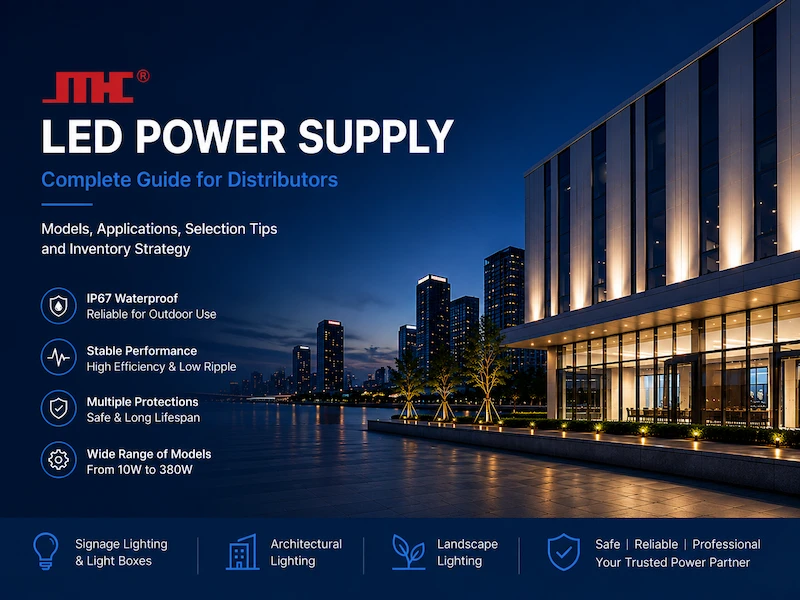
For global lighting companies, choosing an LED power supply professional factory is more than finding a supplier with competitive prices.
A professional factory becomes a long-term manufacturing partner that supports:
- Product development
- Technical selection
- Quality management
- Customized solutions
- Bulk production
- Export requirements
- Long-term supply stability
Many buyers focus only on unit price during sourcing. However, the real cost of a power supply depends on:
- Product reliability
- Failure rate
- Maintenance requirements
- Delivery stability
- Technical support
- Production consistency
A low-cost supplier may create higher costs through:
- Product failures
- Project delays
- Replacement expenses
- Customer complaints
- Warranty issues
A professional LED power supply factory controls the complete manufacturing process, helping buyers reduce risks before products reach the market.
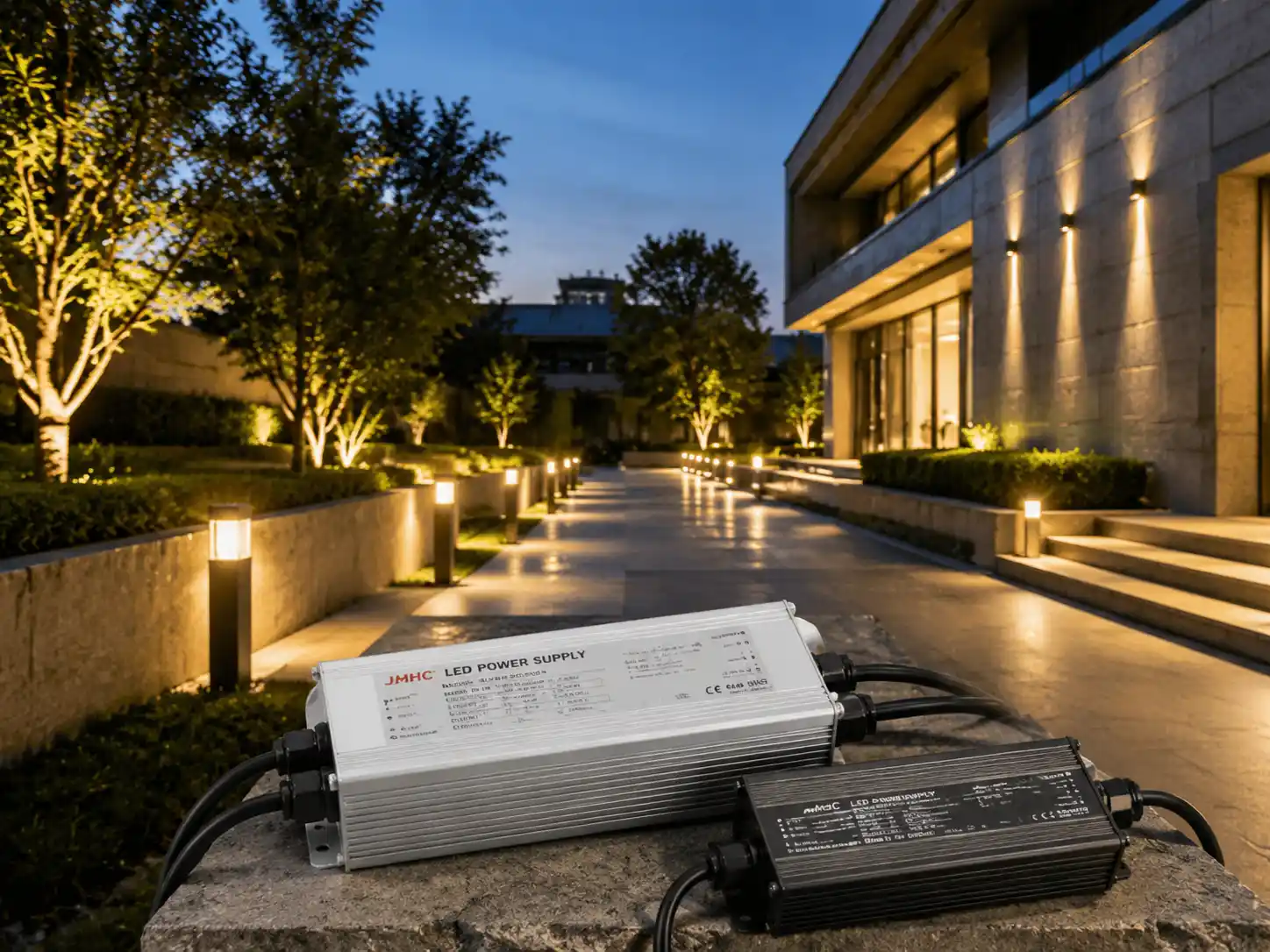
JMHC specializes in LED power supply manufacturing, providing solutions for commercial lighting, outdoor lighting, signage systems, architectural projects, industrial applications, and OEM customers.
What Makes a Professional LED Power Supply Factory?
A professional factory should have capabilities beyond simple assembly.
The key difference is whether the company can control the entire process from design to delivery.
| Capability | Value for Buyers |
|---|---|
| Product development | Creates suitable solutions |
| Engineering support | Solves technical problems |
| Production capability | Ensures stable supply |
| Quality control | Maintains consistency |
| Testing system | Reduces failures |
| OEM capability | Supports customization |
| Export experience | Simplifies global purchasing |
A reliable factory should provide clear answers about:
- How products are designed
- How materials are controlled
- How production quality is managed
- How finished products are tested
- How customized orders are handled
Factory vs Trading Company: What Should Buyers Consider?
Many buyers compare factories and trading companies during sourcing.
Both may have value, but their capabilities are different.
| Professional Factory | Trading Company | |
|---|---|---|
| Product control | Direct control | Depends on supplier |
| Engineering communication | Direct | Usually indirect |
| Customization | Strong capability | Depends on partner |
| Quality control | Internal process | External process |
| Production planning | Controlled | Less predictable |
| Technical support | Manufacturer-based | Limited by supplier |
For standard products, a trading company may provide flexibility.
However, for:
- OEM projects
- Custom products
- Large quantities
- Long-term cooperation
- Technical requirements
working directly with a professional factory usually provides better transparency and control.
Manufacturing Process of LED Power Supply Factory
A professional LED power supply factory should have a structured production process.
A typical manufacturing workflow includes:
1. Product Design and Engineering Review
Before production begins, engineers evaluate:
- Electrical requirements
- Application environment
- Output specifications
- Thermal conditions
- Certification needs
This ensures the product matches the final application.
2. Component Selection and Material Control
Product reliability depends heavily on component quality.
A professional factory should control:
- Component suppliers
- Material specifications
- Approved BOM
- Incoming inspection
- Replacement procedures
Uncontrolled component changes may create differences between samples and mass production.
3. PCB Assembly and Production
The production process should include:
- PCB assembly
- Component installation
- Soldering inspection
- Assembly verification
- Manufacturing process control
Standardized production improves batch consistency.
4. Electrical Testing
Every LED power supply should be tested for:
- Input performance
- Output voltage
- Output current
- Efficiency
- Protection functions
Testing ensures products meet technical requirements before shipment.
5. Aging Testing
Aging testing helps identify early failures.
It can detect:
- Component problems
- Thermal issues
- Output instability
- Protection failures
For large projects, aging testing helps reduce field failures.
6. Final Inspection and Packaging
Before shipment, factories should check:
- Product appearance
- Labels
- Accessories
- Packaging
- Quantity
- Shipping requirements
Quality Control System of a Professional Factory
Quality control separates professional manufacturers from basic suppliers.
A complete QC system includes:
| QC Stage | Purpose |
|---|---|
| Incoming inspection | Verify components |
| First article inspection | Confirm production sample |
| Process inspection | Control assembly quality |
| Electrical testing | Verify performance |
| ATE testing | Improve consistency |
| Aging testing | Detect early failures |
| Final inspection | Confirm shipment quality |
JMHC uses professional testing processes, including ATE testing and full-load aging testing, to improve product reliability.
More information about JMHC manufacturing capability is available on the About Us page.
Product Capability of a Professional LED Power Supply Factory
A reliable factory should support different application requirements.
Common product categories include:
Indoor LED Power Supplies
Suitable for:
- Commercial lighting
- Office lighting
- Retail lighting
- Decorative applications
Key requirements:
- Stable output
- Low ripple
- Compact installation
Waterproof LED Drivers
Suitable for:
- Outdoor lighting
- Landscape lighting
- Signage
- Architectural projects
Important factors:
- IP rating
- Sealing design
- Thermal performance
Mini and Long-Shape Power Supplies
Used where installation space is limited.
Applications:
- Light boxes
- Cabinet lighting
- Linear lighting systems
High-Efficiency and PFC Models
Suitable for:
- Commercial projects
- Industrial applications
- Energy-conscious markets
A professional factory should provide products according to application requirements instead of only selling standard models.
Available product solutions can be reviewed through the JMHC products page.
OEM and ODM Manufacturing Support
Many lighting brands need customized products.
A professional LED power supply factory should support:
- Custom voltage
- Custom wattage
- Cable length
- Connector design
- Housing modification
- Product label
- Packaging
- Private branding
The typical OEM process includes:
- Requirement discussion
- Technical evaluation
- Sample development
- Testing approval
- Pilot production
- Mass production
- Final inspection
- Delivery
OEM capability is especially important for:
- Lighting brands
- Distributors
- Private-label companies
- Engineering projects
Certification and Export Capability
Global buyers need products that meet market requirements.
Common certifications include:
| Certification | Purpose |
|---|---|
| CE | European market |
| EMC | Electromagnetic compatibility |
| LVD | Electrical safety |
| RoHS | Environmental compliance |
| UKCA | UK market |
| BIS | India market |
| CCC | China market |
A professional factory should help buyers understand:
- Which certifications are required
- Which models are covered
- Whether customization affects compliance
- Which documents are available
Certification support reduces import and project approval risks.
Production Capacity and Delivery Reliability
A professional factory must support not only samples but also large-scale orders.
Buyers should evaluate:
- Factory production capacity
- Material supply stability
- Production scheduling
- Testing capacity
- Aging capacity
- Packaging ability
- Export experience
Important questions include:
- Can the factory support repeat orders?
- Can production remain consistent?
- Can delivery meet project schedules?
- Can customized products be produced continuously?
Stable production capability is essential for long-term cooperation.
How to Evaluate an LED Power Supply Factory Before Cooperation
Before selecting a manufacturing partner, buyers should check:
| Evaluation Area | Questions |
|---|---|
| Factory experience | How long has the factory manufactured LED power supplies? |
| Product range | Can they support different applications? |
| Engineering team | Can they provide technical support? |
| Testing equipment | Do they perform reliability tests? |
| Production capacity | Can they handle bulk orders? |
| Customization | Can they support OEM requirements? |
| Certifications | Can they provide export documents? |
| Communication | Can they solve problems quickly? |
A factory that provides clear answers usually has stronger project experience.
Common Mistakes When Choosing a LED Power Supply Factory
Choosing Only Based on Price
Low prices may result in:
- Lower component quality
- Limited testing
- Higher failure rates
Ignoring Production Capability
A supplier may provide samples but fail to support bulk orders.
Skipping Factory Evaluation
Without understanding production processes, buyers may face unexpected risks.
Ignoring After-Sales Support
Technical support is important for long-term cooperation.
Not Confirming Customization Ability
OEM projects require more than standard products.
Buyer Checklist Before Contacting a Factory
Prepare:
| Information | Example |
|---|---|
| Application | Commercial / Outdoor / Industrial |
| Input voltage | 100–240VAC |
| Output voltage | 12V / 24V / 48V |
| Power range | 60W / 120W / 240W |
| Output type | CV / CC |
| Environment | Indoor / Outdoor |
| IP requirement | IP20 / IP67 |
| Certification | CE / UKCA / RoHS |
| Quantity | Sample + bulk order |
| Customization | Label / Cable / Packaging |
| Delivery | Required schedule |
Clear information allows factories to recommend suitable solutions faster.
Why Choose JMHC as Your LED Power Supply Professional Factory?
JMHC focuses on LED power supply design, manufacturing, testing, and global supply.
JMHC provides:
- Professional LED power supply manufacturing
- Engineering support
- Indoor and waterproof solutions
- Stable output designs
- Low ripple performance
- ATE testing
- Full-load aging testing
- OEM/ODM customization
- Certification support
- Bulk production capability
JMHC serves:
- Lighting manufacturers
- OEM brands
- Distributors
- Engineering companies
- Project buyers
Customers can contact JMHC through the Contact page for product evaluation and manufacturing cooperation.
FAQ
1. What is an LED power supply professional factory?
A professional factory designs, manufactures, tests, and supplies LED power solutions with engineering and production capability.
2. Why should buyers work directly with factories?
Direct cooperation provides better control over quality, customization, production, and communication.
3. What makes a good LED power supply factory?
Important factors include manufacturing experience, testing systems, quality control, certifications, and production capacity.
4. Can LED power supply factories provide OEM services?
Yes. Professional factories can customize voltage, wattage, cables, labels, housing, and packaging.
5. What tests should LED power supply factories perform?
Common tests include electrical testing, protection testing, ATE testing, and aging testing.
6. Why is aging testing important?
It helps detect early failures and improves long-term reliability.
7. What certifications should LED power supply factories support?
Requirements depend on the market but commonly include CE, EMC, LVD, RoHS, UKCA, BIS, and CCC.
8. How do factories maintain batch consistency?
Through controlled materials, standardized production, testing procedures, and inspection systems.
9. Can factories support large project orders?
Yes. Professional factories should provide stable production capacity and delivery planning.
10. How can I cooperate with JMHC?
Provide your product requirements, application, quantity, and customization needs for evaluation.
Conclusion
Choosing the right LED power supply professional factory helps lighting brands and project buyers build reliable products and stable supply chains.
A professional manufacturer should provide:
- Manufacturing capability
- Engineering support
- Quality control
- Testing systems
- Certification support
- OEM/ODM solutions
- Reliable production capacity
JMHC supports global customers with professional LED power supply manufacturing and customized lighting solutions.
Contact JMHC to discuss your LED power supply requirements and start a reliable manufacturing partnership.