
LED Driver for Lighting Fixtures: The Component That Quietly Decides Whether Your Fixture Performs—or Fails
It often starts the same way.
A lighting fixture looks perfect on paper. The design is clean, the LEDs are efficient, and the optical performance meets expectations. The first prototypes even pass testing without issues.
Then the product enters real use.
Some fixtures begin to flicker.
Others run hotter than expected.
A few fail earlier than anyone anticipated.
At that point, the question becomes unavoidable: what went wrong?
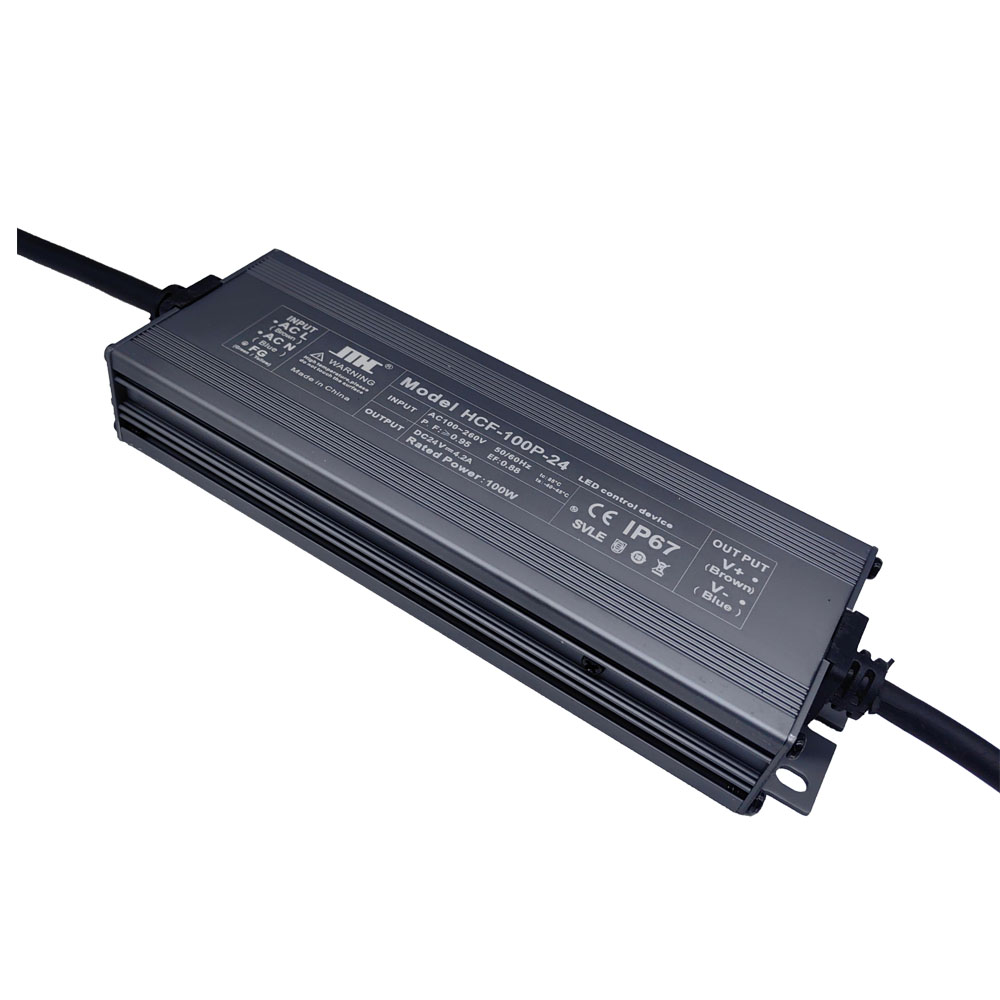
In many cases, the answer is not the fixture itself—but the LED driver for lighting fixtures hidden inside it. When the driver is not properly matched to the fixture’s electrical, thermal, and structural conditions, even a well-designed product can struggle in real environments.
At JMHC, driver development begins with a simple principle: the driver must work with the fixture, not just power it.
What Defines an LED Driver Inside a Lighting Fixture
Before solving problems, it is important to understand what role the driver actually plays inside a fixture.
An LED driver is responsible for converting AC input into stable DC output while maintaining constant current. Unlike general-purpose power supplies, drivers for lighting fixtures must respond dynamically to load conditions, temperature changes, and dimming control signals.
Inside a typical LED driver for lighting fixtures, key components include:
-
Switching circuits for power conversion efficiency
-
Control ICs to maintain constant current output
-
High-grade capacitors to reduce voltage ripple
-
Magnetic components for voltage regulation
-
Thermal structures to manage internal heat buildup
Material selection is critical. Capacitors with higher temperature ratings extend lifespan. Aluminum housings or sealed enclosures improve heat dissipation and environmental protection.
When these material and structural details are properly aligned, the driver becomes a stable foundation for fixture performance.
Why Drivers Must Be Matched to Fixture Design
Many fixture issues originate from a simple mismatch: the driver was not designed specifically for the fixture it powers.
Lighting fixtures vary widely in structure:
-
Compact downlights with limited internal space
-
Linear fixtures with distributed thermal load
-
Outdoor luminaires exposed to moisture and temperature variation
-
Decorative fixtures requiring precise dimming behavior
A generic driver may technically power the LEDs, but it may not perform reliably within these constraints.
By designing a LED driver for lighting fixtures based on real fixture conditions, manufacturers can:
-
reduce internal heat accumulation
-
stabilize brightness output
-
ensure compatibility with dimming systems
-
extend overall product lifespan
This alignment is especially important in commercial and architectural lighting, where consistency across installations is critical.
Manufacturing and Assembly: Where Fixture Reliability Is Actually Decided
Even with the correct design, driver performance depends heavily on manufacturing quality.
At JMHC, production is structured to maintain consistency across large volumes. Component sourcing is standardized to avoid variation in electrical performance. PCB assembly follows controlled processes to ensure stable soldering and circuit integrity.
For drivers used in enclosed fixtures, thermal management becomes a key focus. Internal layouts are optimized to reduce heat concentration, while housing materials support efficient heat dissipation.
Outdoor fixture drivers undergo sealing processes to protect internal electronics from moisture and environmental stress.
Each unit is then tested before shipment, ensuring that every LED driver for lighting fixtures meets functional requirements before reaching the customer.
Performance Comparison: Generic Drivers vs Fixture-Optimized Drivers
| Performance Factor | Generic Driver | JMHC Fixture-Matched Driver |
|---|---|---|
| Fixture compatibility | Limited | Fully aligned |
| Thermal performance | Moderate | Optimized (+20–30%) |
| Flicker rate | Occasional | Minimal |
| Failure rate | 6–10% | <3% |
| Dimming stability | Inconsistent | Stable across range |
| Batch consistency | ~85% | >98% |
These differences may not be obvious during initial testing, but they become critical over time—especially in large installations.
Common Issues in Lighting Fixtures—and How Proper Driver Design Solves Them
Many problems appear repeatedly across different lighting projects. Understanding them is the first step toward solving them effectively.
Flicker and Inconsistent Brightness
When drivers are not compatible with dimming systems, brightness fluctuations can occur. This is especially noticeable in commercial environments.
Solution:
Drivers should be designed and tested with specific dimming protocols (0–10V, TRIAC, PWM) to ensure smooth brightness control.
Overheating Inside Fixtures
Compact fixtures often trap heat. If the driver is not designed for this environment, internal temperatures rise quickly.
Solution:
Thermal optimization—including component layout and heat-resistant materials—reduces temperature buildup and improves stability.
Early Failure in Outdoor Fixtures
Outdoor lighting systems face humidity, rain, and temperature variation.
Solution:
Waterproof driver structures with IP65–IP67 protection prevent moisture ingress and extend product lifespan.
Inconsistent Performance Across Production Batches
Large projects require uniform lighting performance across thousands of fixtures.
Solution:
Standardized production processes and controlled component sourcing ensure consistent output across batches.
ToB Solutions: Supporting Fixture Manufacturers and Project Buyers
For business buyers, driver selection directly affects product quality, brand reputation, and long-term operational cost.
Lighting Fixture Manufacturers
Custom drivers allow manufacturers to align electrical performance with fixture design, improving product reliability and differentiation.
Engineering Contractors
Large-scale installations require consistent driver performance. Stable drivers ensure uniform lighting across entire projects.
Distributors and Exporters
Drivers aligned with certification requirements simplify international market entry and reduce compliance risks.
Through collaboration with a reliable manufacturer, LED driver for lighting fixtures solutions can support both product development and scalable production.
Frequently Asked Questions
Q1: Can a universal driver work for all lighting fixtures?
In most cases, no. Different fixtures require specific electrical and thermal characteristics for stable operation.
Q2: Why do some fixtures fail after installation?
Often due to mismatched drivers that cannot handle real operating conditions such as heat or humidity.
Q3: How can buyers ensure driver compatibility?
By working directly with manufacturers who can align driver design with fixture requirements.
A Reliable Fixture Starts With the Right Driver Inside
Lighting fixtures are often judged by their appearance and brightness. But long-term performance depends on something less visible—the driver inside.
At JMHC, driver design and production are developed with real fixture conditions in mind. From material selection to manufacturing control and full-load testing, the goal is to deliver drivers that perform consistently across different applications.
To explore our LED driver solutions for lighting fixtures, visit our homepage:
👉 https://www.jmhce.com/
If you are developing lighting products or managing a project, our team can help you identify the right driver configuration:
👉 https://www.jmhce.com/contact-us