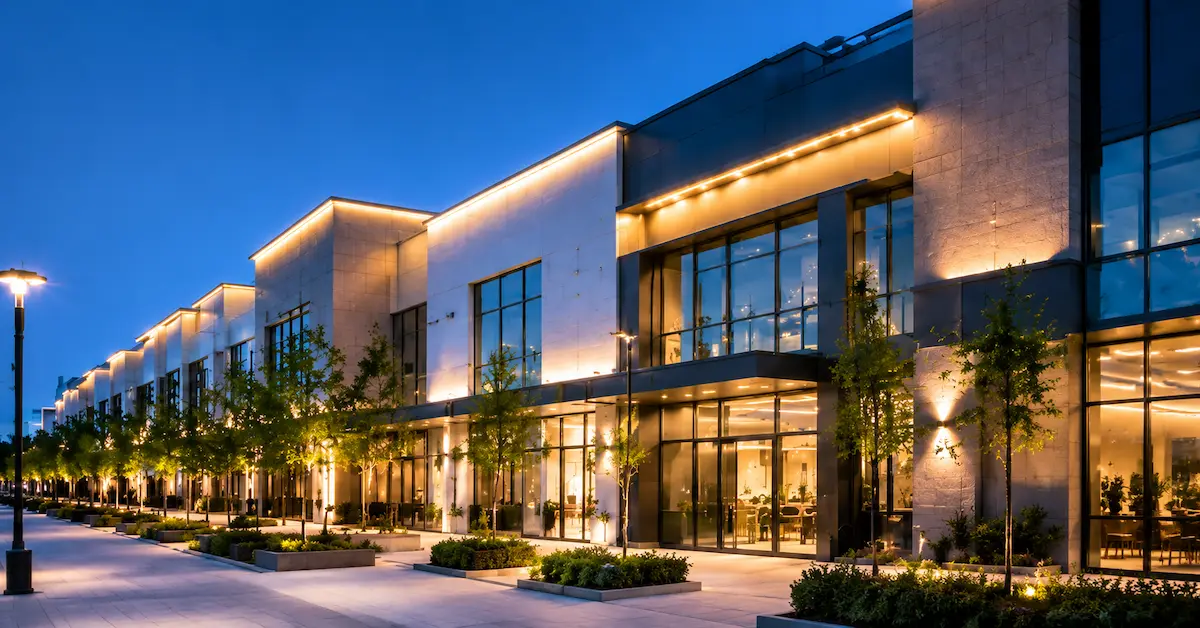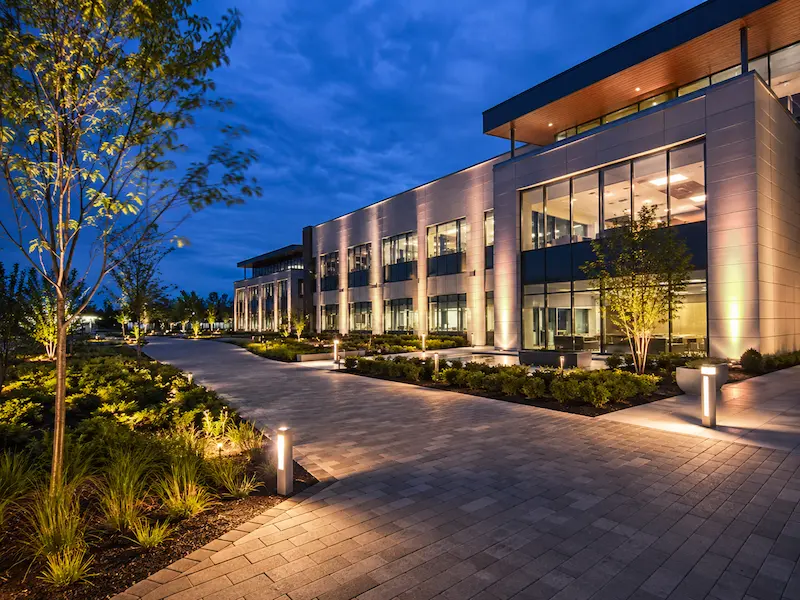

Outdoor lighting projects are exposed to rain, humidity, dust, temperature changes, and unstable grid conditions. When the power supply is not designed for these conditions, common failures include water ingress, flicker, overheating, unstable brightness, and repeated maintenance after installation.
For project contractors, lighting brands, and engineering buyers, selecting the right LED power supply for outdoor lighting projects is not only about matching voltage and wattage. It is about ensuring long-term system stability in harsh environments. JMHC solves these problems through waterproof structure design, stable switching power architecture, thermal control, and protection functions for outdoor applications.
Why Outdoor Lighting Power Supplies Fail
Outdoor lighting failures usually start from small design weaknesses.
A standard indoor power supply may work during initial testing, but outdoor environments create much higher stress. Moisture can enter the housing, heat can accumulate inside sealed structures, and voltage fluctuation can damage internal components.
Typical failure points include:
- Poor sealing around cable entry points
- Insufficient waterproof protection
- Weak heat dissipation
- Low-quality capacitors
- Incomplete short-circuit or overload protection
- Unstable DC output under long operating hours
This is why a professional LED power supply for outdoor lighting projects must combine electrical design and environmental protection.
How Outdoor LED Power Supply Works
An outdoor LED power supply converts AC input into stable DC output for LED lighting systems. In outdoor projects, it must also protect the lighting system from environmental and electrical stress.
The core working process includes:
- AC input conversion
- Switching power regulation
- Stable DC output
- Current and voltage protection
- Heat dissipation during operation
- Waterproof protection for outdoor installation
For outdoor systems, stable output is especially important because lighting fixtures often operate for long hours at night and may be installed in locations that are difficult to maintain.
Standard Power Supply vs Outdoor-Grade Power Supply
| Item | Standard Power Supply | Outdoor-Grade Power Supply |
|---|---|---|
| Application | Indoor / dry environment | Outdoor lighting projects |
| Waterproof design | Limited | IP65 / IP67 optional |
| Heat dissipation | Basic | Optimized housing structure |
| Protection function | Basic | Short-circuit, overload, over-voltage protection |
| Outdoor reliability | Low to medium | High |
| Maintenance cost | Higher risk | Lower long-term cost |
This comparison shows why outdoor projects require a different product approach rather than a general-purpose power supply.
JMHC Solution for Outdoor Lighting Projects
JMHC develops outdoor power solutions by focusing on three technical priorities: waterproof reliability, stable electrical output, and long-term operating safety.
For a LED power supply for outdoor lighting projects, JMHC usually considers:
- Waterproof housing structure
- Sealed cable connection design
- Stable switching power circuit
- Low ripple output
- Heat dissipation structure
- Short-circuit protection
- Overload protection
- Over-voltage protection
These features help reduce failure risks caused by rain, dust, heat, and unstable power conditions.
Product Advantages for Outdoor Applications
A reliable outdoor lighting power supply should not only work at installation. It should continue working after months or years of environmental exposure.
JMHC outdoor power solutions help buyers achieve:
- More stable brightness output
- Lower failure rate in humid environments
- Reduced maintenance frequency
- Better protection for LED fixtures
- More reliable performance in long operating cycles
- Easier project installation and replacement planning
For contractors and project buyers, these advantages directly reduce after-sales pressure and lifecycle cost.
Common Application Scenarios
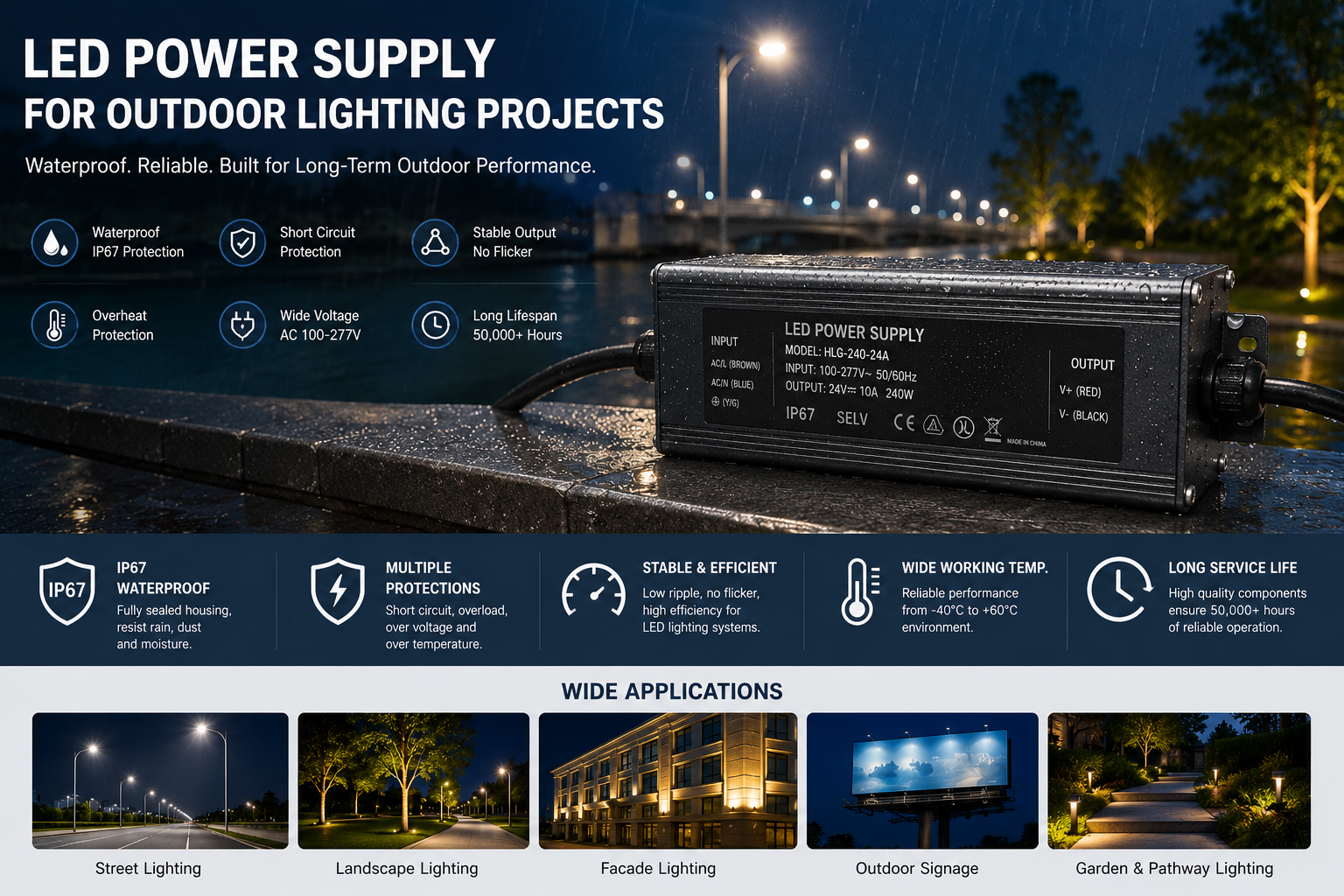
The LED power supply for outdoor lighting projects is suitable for many outdoor lighting systems where reliability is critical.
Street Lighting
Street lighting requires long operating hours and stable DC output. A reliable power supply helps reduce lamp failure and maintenance workload.
Landscape Lighting
Landscape lighting is often exposed to moisture from rain, irrigation systems, and ground humidity. Waterproof protection is essential.
Architectural Facade Lighting
Building facade lighting requires stable brightness across long lighting runs. Power instability may cause visible brightness differences.
Outdoor Signage
Advertising signs require continuous visibility. Stable power reduces downtime and brightness fluctuation.
Garden and Pathway Lighting
Small outdoor fixtures still require reliable waterproof protection, especially in humid or rainy regions.
Selection Guide for Outdoor Lighting Buyers
When choosing a power supply for outdoor lighting projects, buyers should check more than wattage.
Key selection points include:
- Confirm the output voltage and current match the LED fixture
- Choose waterproof grade based on installation environment
- Reserve enough power margin
- Check protection functions
- Evaluate heat dissipation design
- Confirm installation space and wiring method
- Choose a supplier with stable production and technical support
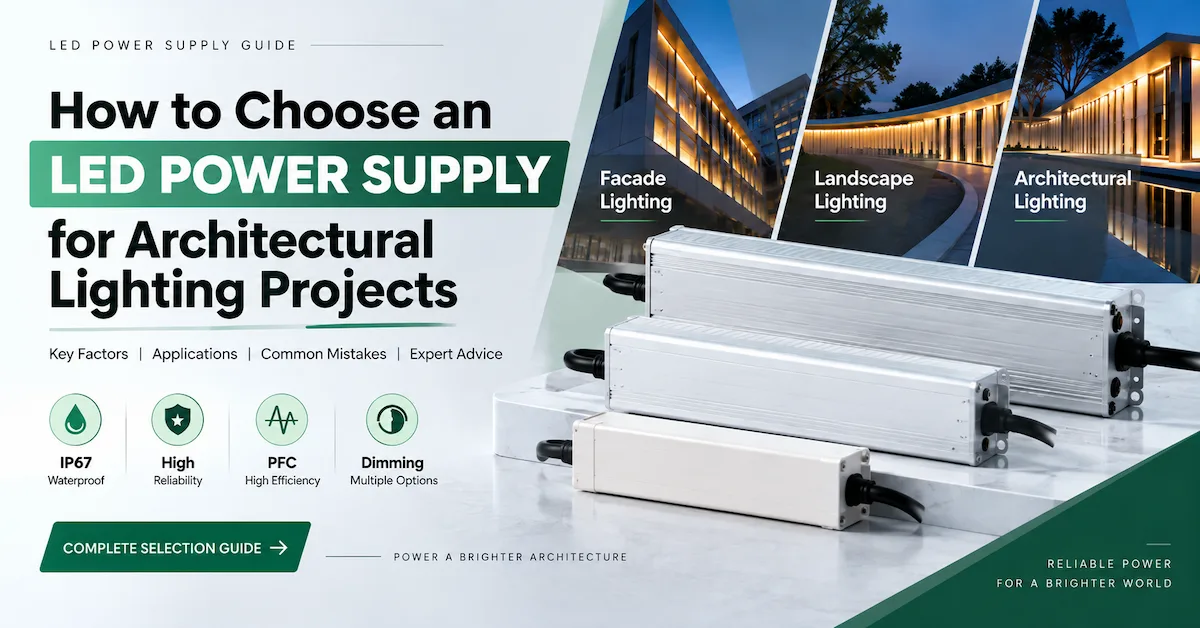
For demanding outdoor projects, an IP65 or IP67 waterproof LED power supply is usually more suitable than a basic indoor unit.
Frequently Asked Questions
Q1: Can indoor LED power supplies be used outdoors?
No. Indoor power supplies are not designed for rain, dust, humidity, or temperature variation. Outdoor projects should use waterproof power supplies.
Q2: What waterproof grade is suitable for outdoor lighting?
IP65 is suitable for many general outdoor environments, while IP67 is better for harsher conditions or higher moisture exposure.
Q3: How do I choose the right wattage?
The power supply should match the total LED load and include a reasonable power margin to avoid long-term overload operation.
Reliable Outdoor Lighting Starts with the Right Power Supply
Outdoor lighting projects require more than basic power conversion. They need stable output, waterproof protection, heat control, and safety protection working together as one system.
A well-designed LED power supply for outdoor lighting projects helps reduce waterproof failure, flicker, overheating, and maintenance costs. JMHC provides outdoor lighting power supply solutions for street lighting, landscape lighting, facade lighting, signage systems, and other project applications.
To learn more about JMHC’s manufacturing capability and company background, visit:
https://www.jmhce.com/about-us
To explore outdoor LED power supply products and related models, visit:
https://www.jmhce.com/products
For common technical questions, product selection support, and application guidance, visit:
https://www.jmhce.com/faqs